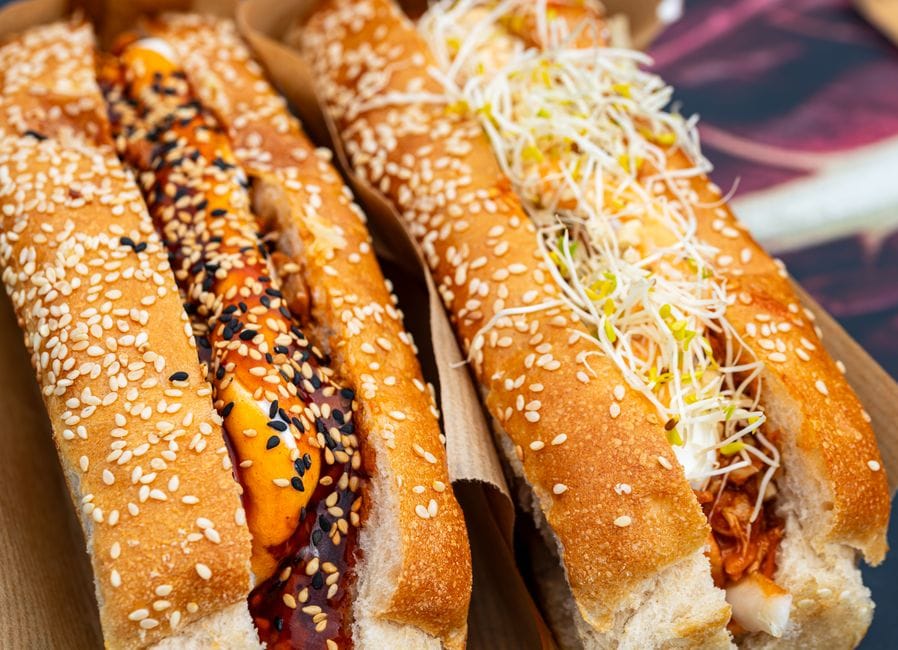
The hot dog eating contest prize at the Nathan’s Famous Fourth of July event is $10,000 in cash plus the Mustard Belt for the winner of each division — men’s and women’s — with a total purse of $40,000 split evenly between the two contests, according to reporting from DraftKings Network and Yahoo Sports on the 2026 event. Second place takes $5,000, third gets $2,500, fourth gets $1,500, and fifth gets $1,000.
- What the Hot Dog Eating Contest Prize Pays, Place by Place
- The 2026 Results and Who Collected the Hot Dog Eating Contest Prize
- The Mustard Belt Is Not Part of the Cash Prize
- Why the Prize Money Is the Smallest Part of a Champion’s Income
- How You Actually Get a Shot at the Hot Dog Eating Contest Prize
- What Happens After Someone Wins the Money
- The Origin Story Almost Everyone Repeats Is Made Up
- Frequently Asked Questions
That surprises a lot of people. The contest gets wall-to-wall coverage on ESPN every July 4th, draws tens of thousands to Coney Island, and turns its champions into household names — and the winner walks away with roughly what a mid-tier golf tournament pays for missing the cut. The real money in competitive eating lives somewhere else entirely.
Below is the full picture: what the hot dog eating contest prize pays at every level, who won in 2026 and with what numbers, how the belt works, how eaters actually qualify, and why the champions’ bank accounts don’t depend on that $10,000 check at all.
What the Hot Dog Eating Contest Prize Pays, Place by Place
The payout structure is identical for the men’s and women’s championships. Each division carries a $20,000 pot, distributed across the top five finishers. Everyone below fifth place gets nothing but the experience — and a very long afternoon.
| Finish | Cash (each division) |
| 1st place | $10,000 + Mustard Belt |
| 2nd place | $5,000 |
| 3rd place | $2,500 |
| 4th place | $1,500 |
| 5th place | $1,000 |
| Division total | $20,000 |
| Combined purse | $40,000 |
The women’s champion and the men’s champion receive the same top prize. That parity is worth noting — it is not the norm across most professional sports, and it has been the structure at Nathan’s since the women’s division was created in 2011.
The 2026 Results and Who Collected the Hot Dog Eating Contest Prize
Joey Chestnut won the 2026 men’s contest with 66 hot dogs and buns in 10 minutes, claiming his 18th Mustard Belt and extending his own record, per CBS New York and ESPN. Miki Sudo won the women’s contest with 38.75 hot dogs and buns — her fifth straight win and 12th title overall.
Neither total was a personal best. Chestnut’s world record is 76 hot dogs and buns, set in 2021. Sudo’s women’s record is 51, set in 2024. Both records still stand, which tells you something about how much a 10-minute window can swing on heat, humidity, and how the buns hold up.
Chestnut’s 2026 win also closed a strange chapter. He was barred from the 2024 contest over a sponsorship conflict after signing a deal with plant-based brand Impossible Foods, then returned in 2025 and won with 70.5 hot dogs. He told Fox News he and Nathan’s “found common ground” — his Impossible work was a meatless-Monday campaign, not a rival hot dog.
The Mustard Belt Is Not Part of the Cash Prize
The bejeweled Mustard Belt goes to each champion alongside the money, and it is not sold, valued, or awarded as a cash equivalent. It’s a trophy. Champions keep it, display it, and defend it — but it does not appear anywhere in the published prize breakdown as a dollar figure.
You’ll occasionally see the belt described as worth a specific amount online. Nathan’s and Major League Eating have not published an appraised value, so treat any number you see as unverified. What is verifiable is that the belt, not the $10,000, is what eaters describe as the thing they came for.
Why the Prize Money Is the Smallest Part of a Champion’s Income
Here’s the context that reframes everything: Chestnut’s 2024 absence stemmed from a four-year deal with Impossible Foods reported at $1.2 million. That single endorsement contract is worth roughly 30 times what a decade of winning at Coney Island would pay in prize money.
Top competitive eaters build income from appearance fees, sponsorships, exhibition events, streaming and social media, and dozens of other Major League Eating contests throughout the year. The Nathan’s hot dog eating contest prize is the most visible payday on the calendar, not the largest. It functions more like a title fight purse in a sport where the belt itself drives the endorsement value.
That’s also why the exclusivity dispute mattered so much. A brand conflict didn’t threaten $10,000 — it threatened access to the platform that makes the rest of the money possible.
How You Actually Get a Shot at the Hot Dog Eating Contest Prize
You can’t sign up on the morning of July 4th. Per Major League Eating, which sanctions and oversees the event, competitors must be under MLE contract, must be at least 18, and must acknowledge the inherent risks of competitive eating. The field is built from past champions, regional qualifier winners, and wild-card entrants.
MLE runs qualifying contests around the country in the spring and early summer. The 2026 slate included events at Lake Compounce in Bristol, Connecticut, and at Hersheypark in Pennsylvania, among others. Winning a regional is the standard route in for someone who isn’t already a name.
📨 Get Free Sweepstakes Alerts
Free · No spam · Unsubscribe anytime
The championship rules are simple and strictly enforced. Ten minutes. Hot dogs and buns both count. Partially eaten dogs are measured in eighths. Anything that comes back up is a disqualification. A tie triggers a five-dog eat-off.
What Happens After Someone Wins the Money
Contest winnings are income. The IRS states in Publication 525 that if you win a prize in a drawing, quiz program, contest, or similar event, you must include it in your income, and that prizes paid in goods or services count at fair market value. Payers generally issue a Form 1099-MISC reporting amounts of $600 or more in Box 3, “Other Income.”
That applies to every payout tier here, since the smallest prize is $1,000. How any individual’s taxes actually work out depends on their own situation — filing status, other income, state rules, and whether they compete as a business. Anyone in that position should check IRS.gov or talk to a tax professional about their specific case. This article describes how the reporting works, not what anyone should do.
The Origin Story Almost Everyone Repeats Is Made Up
For decades, the contest was promoted as an unbroken tradition dating to July 4, 1916, when four immigrants supposedly settled an argument about patriotism by eating hot dogs, and an Irishman named James Mullen won with 13 franks. It’s a good story. It never happened.
Press agent Mortimer Matz told The New York Times in 2010 that he and fellow publicist Max Rosey invented the 1916 legend in the early 1970s, when the July 4th contest actually started — “in Coney Island pitchman style, we made it up.” The Times added an editor’s note saying a Nathan’s spokesman confirmed the company had no evidence of a contest before Matz and Rosey got involved.
So the event that now pays a $40,000 combined purse and airs live on ESPN was born as a publicity stunt with a fake backstory, reportedly because Nathan Handwerker was annoyed that people were eating hot dogs at his stand without paying. That’s the most Coney Island fact in this entire article.
Frequently Asked Questions
How much is the hot dog eating contest prize for first place?
$10,000 in cash plus the Mustard Belt, awarded to both the men’s and women’s champion. The full purse is $40,000, split evenly at $20,000 per division across the top five finishers.
Do the women’s and men’s champions get the same amount?
Yes. Both divisions pay $10,000 for first, $5,000 for second, $2,500 for third, $1,500 for fourth, and $1,000 for fifth. The payout tables are identical.
Who won in 2026 and how many hot dogs did they eat?
Joey Chestnut won the men’s title with 66 hot dogs and buns, his 18th Mustard Belt. Miki Sudo won the women’s title with 38.75, her 12th. The standing records are Chestnut’s 76 from 2021 and Sudo’s 51 from 2024.
Can anyone enter and compete for the hot dog eating contest prize?
No. Major League Eating requires competitors to be at least 18 and under MLE contract. The field comes from past champions, winners of regional qualifiers held in the spring, and wild-card selections.
Want to put this knowledge to work?
Know the Rules Where You Live
Sweepstakes and prize rules change from state to state — what a sponsor can offer, how prizes are handled, and what protections you have. Pick your state to see the exact rules that apply where you live.
See Sweepstakes Laws in All 50 States →
Sources & How to Verify
The facts on this page are drawn from official government and primary sources. Rules and figures change, so always confirm the current details with the official agency or the promotion’s own published rules.
- FTC Consumer Advice: consumer.ftc.gov — prize, sweepstakes, and lottery scam guidance
- IRS: irs.gov — how prizes and winnings are treated as income
- Social Security Administration: ssa.gov — what SSI recipients must report
- The promotion’s official rules: every legitimate sweepstakes publishes them — the rules page is always the final word
Content last reviewed August 2026. If you notice outdated information, please contact us.
You May Also Like
Related Guides
- Sweepstakes Laws by State (50-State Guide)
- More in This Category
- Sweepstakes Resources
- Scam Checks
- Sweepstakes Tax Calculator
- All Active Sweepstakes
Informational only — not legal, tax, or financial advice. Win Big Daily is an independent educational resource. Prize rules, tax treatment, and benefit-program requirements vary by state and program and change over time, so always verify the current details with the official agency, the promotion’s published rules, or a qualified professional before acting. If a topic involves government benefits, contact the program office about your specific situation.