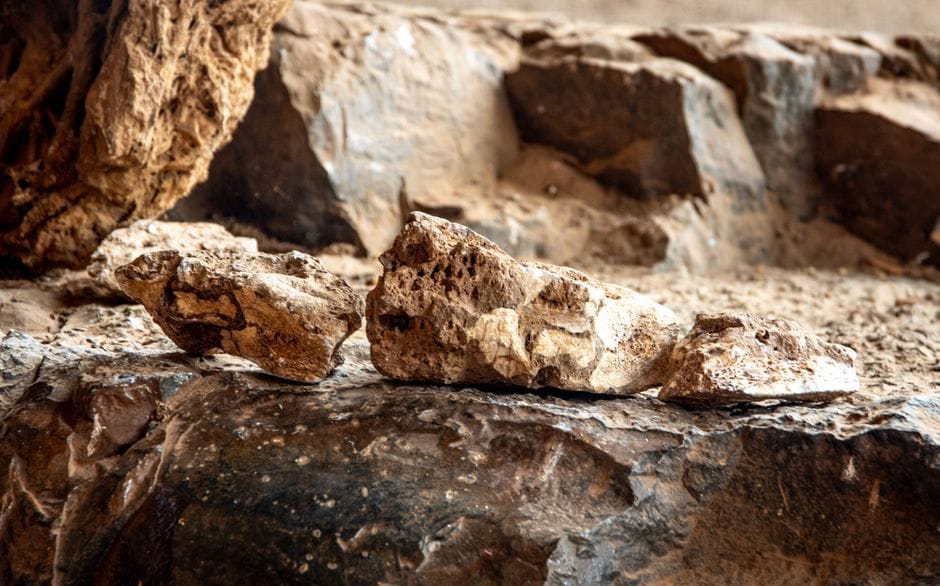
Meteorite ownership in the United States almost always follows the land: if a space rock falls on property you own, it’s yours. That rule comes from an 1892 Iowa Supreme Court case, Goddard v. Winchell, in which a 66-pound meteorite fragment buried itself about three feet into John Goddard’s prairie land. A neighbor dug it up and sold it. The court ordered it returned, holding that whatever becomes affixed to the soil belongs to the owner of the soil.
That single case still anchors how American courts think about meteorite ownership more than 130 years later. The meteorite isn’t treated as lost property that a finder can claim. It’s treated as part of your real estate, the way a mineral deposit or a fallen tree limb would be. The person who spots it first has no special claim just for spotting it.
But the answer gets more complicated fast. Renting changes it. Federal land changes it. And once you decide to sell, tax and documentation questions show up that most people never think about. Here’s how the whole thing actually works, and what to do in the first 48 hours.
How Meteorite Ownership Works on Private Land
The legal principle is called accession. When something attaches itself to your land through natural causes, it becomes part of the land, and the landowner takes title. In Goddard v. Winchell, the defendants argued for “title by occupancy” — the idea that unclaimed movable objects belong to whoever picks them up. The court rejected it, reasoning that the meteorite had embedded itself and could not be removed without human effort.
Practically, that means if a fireball drops a stone in your backyard, your driveway, or your pasture, meteorite ownership is yours by default. You don’t need to register it with the government. You don’t need a permit. There is no federal law in the U.S. requiring you to surrender a meteorite found on your own land, and no agency claims it.
Property law is state law, though, and the details of how a court would handle a genuine dispute can vary from one state to the next. There’s no national meteorite statute to look up. If real money or a real disagreement is involved, that’s a question for a property attorney licensed in your state, not for an article.
Renting, Easements, and Split Meteorite Ownership
The most famous meteorite ownership fight in American history was between a tenant and a landlord. On November 30, 1954, a meteorite crashed through the roof of a rented house near Sylacauga, Alabama, and struck Ann Hodges while she napped on her couch — the only well-documented case of a person being hit.
Hodges and her husband claimed the rock. So did Birdie Guy, who owned the house. Guy’s argument was simple: it fell on her property. After roughly a year of public dispute and legal wrangling, the Hodgeses settled by paying Guy $500 for it. By then the offers — reportedly up to $5,000 — had dried up. They donated it to the Alabama Museum of Natural History in 1956.
The lesson holds today. If you rent, the space rock in the yard most likely belongs to your landlord, not you. Other wrinkles can complicate meteorite ownership too: utility easements, mineral rights severed from surface rights, HOA-controlled common areas, and shared or disputed boundary lines. Check your deed and lease before you assume anything.
Meteorite Ownership on Public and Federal Land
Step off your own property and the rules flip entirely. Meteorites found on federal land are federal property. The Bureau of Land Management and the National Park Service both treat them that way, citing authorities including the Antiquities Act of 1906 and the Federal Land Policy and Management Act.
BLM Instruction Memorandum No. 2012-182 sets the clearest numbers. Under that policy, casual collecting on BLM land is limited to what you can hand-carry, capped at 10 pounds of meteorites per person per year, with no permit and no fee — but strictly for personal use. Selling or bartering a casually collected specimen is commercial use, which requires a land use permit under FLPMA.
BLM also limits casual collecting to surface finds using non-motorized, non-mechanical equipment; metal detectors are allowed. Developed recreation sites, wilderness areas, and certain conservation-system units are closed to it. Casual collecting is not permitted at all on lands run by the National Park Service, the Bureau of Reclamation, or the U.S. Fish and Wildlife Service.
| Where it landed | Who generally owns it |
| Land you own | You, under the accession rule from Goddard v. Winchell |
| Land you rent | The property owner, absent a written agreement saying otherwise |
| A neighbor’s land | The neighbor — entering to retrieve it without permission risks trespass |
| BLM public land | Federal government; personal-use collecting capped at 10 lbs/person/year |
| National park or wildlife refuge | Federal government; no casual collecting permitted |
| State or municipal land | Varies by state and agency — contact the managing agency directly |
What to Do in the First 48 Hours
- Photograph everything before you move it — the rock in place, the impact hole, the surroundings, with a scale object. Fall context is a large part of scientific and market value.
- Note the date, time, and exact location. GPS coordinates if you can.
- Handle it minimally and don’t clean it. Skip magnets, water, and scrubbing. A fusion crust is fragile and washing destroys data.
- Get it identified. ASU’s Buseck Center for Meteorite Studies suspended its public identification program in 2010 and now refers the public to state geological surveys, university geology departments, and natural history museums.
- Understand the naming trade-off. Meteoritical Society nomenclature guidelines require a type specimen of 20% of total mass or 20 grams, whichever is less, deposited permanently in an approved repository, in order to receive an official name.
Value, Taxes, and Insurance
Values swing enormously. Common ordinary chondrites typically trade in the low single digits per gram; pallasite slices command far more; and lunar and Martian material has reached $1,000 per gram or higher. In July 2025, Sotheby’s New York sold NWA 16788, the largest known Martian meteorite on Earth, for $5.3 million. Most backyard finds are worth vastly less.
Taxes are where meteorite ownership gets genuinely unintuitive. Treasury regulations treat treasure trove as gross income at its U.S. dollar value in the year it’s reduced to undisputed possession — the rule applied in Cesarini v. United States (N.D. Ohio 1969) to cash found inside a used piano. How the IRS would treat a specific meteorite find depends on facts a tax professional should review.
For damage, “falling objects” is a named peril in standard homeowners forms, and a standard HO-3 covers the dwelling against perils not expressly excluded. Insurance analysts note a direct strike would typically be covered — but blast-wave damage, such as windows shattered by an airburst, may not be. Read your own policy and call your carrier.
📨 Get Free Sweepstakes Alerts
Free · No spam · Unsubscribe anytime
What Most People Get Wrong
“Finders keepers.” No. American courts rejected that argument in 1892. Location of the fall controls meteorite ownership, not who picked it up.
“NASA will confiscate it.” NASA has no claim on meteorites found on private land, and no federal agency does either. Federal claims apply to federal land.
“It’s automatically worth a fortune.” The overwhelming majority of suspected meteorites turn out to be terrestrial rock or slag — “meteorwrongs.” Most verified finds are common types worth modest amounts.
“Selling it is simple.” Buyers pay for classification and provenance. An unclassified rock with no documented fall history is a hard sell at any price.
Frequently Asked Questions
Do I have to report a meteorite to the government?
Not if it fell on your own private land. There is no federal reporting requirement. Researchers do encourage voluntary reporting to a university or museum, since documented falls are scientifically valuable and classification usually increases market value.
Can I go get a meteorite that landed on my neighbor’s yard?
Not without permission. Under the same accession principle, meteorite ownership goes to that landowner. Entering to retrieve it uninvited can amount to trespass and, if you take it, conversion. Ask first, and put any sharing arrangement in writing.
Is it legal to buy and sell meteorites in the U.S.?
Yes, for legally acquired specimens from private land. Material taken from federal land under BLM’s casual-collecting allowance may not be sold or bartered — that requires a FLPMA land use permit. Some foreign countries restrict export, so provenance documentation matters.
Does homeowners insurance cover a meteorite hitting my house?
Usually. “Falling objects” is a named peril in standard homeowners policies, and coverage analysts have said a direct meteorite strike would typically qualify. Shockwave-only damage may fall outside coverage. Your deductible and exact policy language decide it — confirm with your insurer.
Want to put this knowledge to work?
Know the Rules Where You Live
Sweepstakes and prize rules change from state to state — what a sponsor can offer, how prizes are handled, and what protections you have. Pick your state to see the exact rules that apply where you live.
See Sweepstakes Laws in All 50 States →
Sources & How to Verify
The facts on this page are drawn from official government and primary sources. Rules and figures change, so always confirm the current details with the official agency or the promotion’s own published rules.
- FTC Consumer Advice: consumer.ftc.gov — prize, sweepstakes, and lottery scam guidance
- IRS: irs.gov — how prizes and winnings are treated as income
- Social Security Administration: ssa.gov — what SSI recipients must report
- The promotion’s official rules: every legitimate sweepstakes publishes them — the rules page is always the final word
Content last reviewed August 2026. If you notice outdated information, please contact us.
You May Also Like
Related Guides
- Sweepstakes Laws by State (50-State Guide)
- More in This Category
- Sweepstakes Resources
- Scam Checks
- Sweepstakes Tax Calculator
- All Active Sweepstakes
Informational only — not legal, tax, or financial advice. Win Big Daily is an independent educational resource. Prize rules, tax treatment, and benefit-program requirements vary by state and program and change over time, so always verify the current details with the official agency, the promotion’s published rules, or a qualified professional before acting. If a topic involves government benefits, contact the program office about your specific situation.