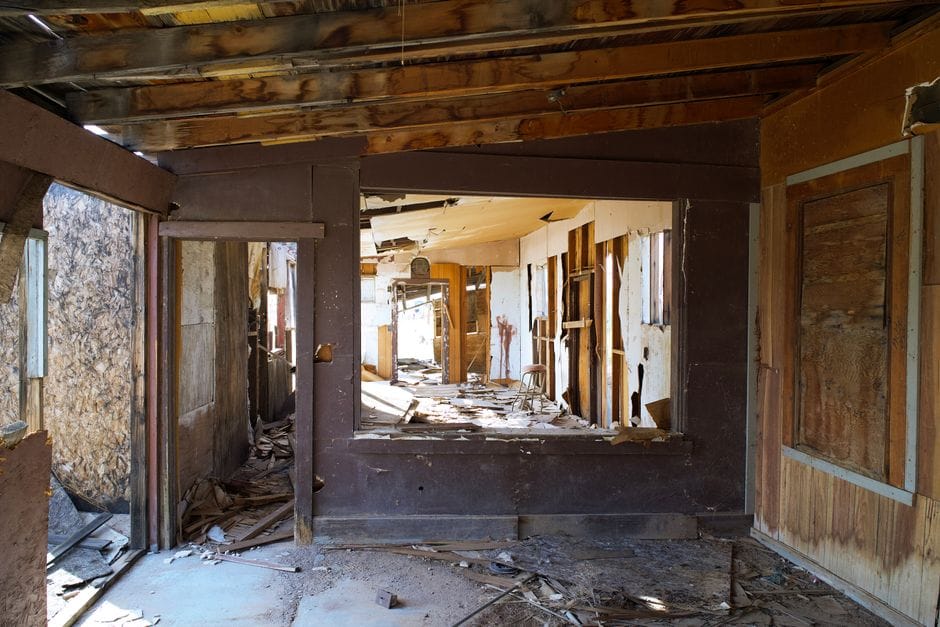
Abandoned property contents almost never become yours the moment someone walks away from them. In nearly every situation — a tenant’s belongings left in a rental, a storage unit that stopped getting paid, a wallet on a sidewalk — the law treats the stuff as still belonging to its original owner until a specific legal process runs its course. That process usually means written notice, a waiting period set by state law, and sometimes a public sale.
- What “abandoned” legally means — and why it matters
- Who actually ends up owning abandoned property contents
- Rentals: what happens to belongings left behind
- Storage units: how a lien turns abandoned property contents into auction lots
- Packages you never ordered, and things you find on the ground
- What most people get wrong about abandoned property contents
- Steps to take if you’re holding someone’s stuff
- Frequently Asked Questions
The short answer: you get legal ownership of abandoned property contents only after the person or business holding them follows the required steps and the owner fails to claim them in time. Those steps and timelines are set state by state, and they are not suggestions. Skipping them can turn a cleanout into a lawsuit.
There is one big exception most people have heard of and few people apply correctly: merchandise mailed to you that you never ordered. Under 39 U.S. Code § 3009, part of the Postal Reorganization Act of 1970, you may treat that merchandise as a gift. Everything else below is more complicated. Here is how each situation actually works.
What “abandoned” legally means — and why it matters
Courts generally split left-behind items into three buckets: lost (the owner didn’t mean to part with it), mislaid (the owner set it down and forgot it), and abandoned (the owner intentionally gave up all claim to it). True abandonment requires intent to give up ownership, not just absence.
That distinction is why you can’t claim a couch just because a tenant moved out and left it. Moving out fast, getting evicted, or falling behind on storage rent doesn’t prove someone intended to surrender their things. State statutes fill the gap by defining exactly when a holder may treat abandoned property contents as legally disposable.
The practical takeaway: “they left it, so it’s mine” is not a legal rule anywhere in the US. Some process almost always applies.
Who actually ends up owning abandoned property contents
Different situations run on completely different rules. This table compares the most common ones. The timeframes shown are real statutory examples — they are illustrations, not national standards.
| Situation | Who holds it | Typical path to legal ownership | Verified example |
|---|---|---|---|
| Tenant belongings after move-out | Landlord | Written notice + state waiting period, then sale or disposal | Arizona A.R.S. § 33-1370 requires holding the property 14 calendar days after retaking possession |
| Storage unit in default | Facility operator | Default, notice to occupant and lienholders, cure period, lien auction | Texas Property Code Ch. 59 allows sale if charges aren’t paid before the 31st day after notice is mailed or published |
| Item you find in public | Finder, then police | Turn in, agency holds it, title may vest in finder | California Civil Code § 2080.1: property under $250 unclaimed after 90 days vests in the finder |
| Unordered merchandise in the mail | You | Immediate — it’s a gift | 39 U.S.C. § 3009 gives you the right to retain, use, discard, or dispose of it |
| Dormant bank account or uncashed check | State treasurer | Escheat after dormancy; owner claims anytime | Dormancy is commonly three years, but each state sets its own by property type |
Rentals: what happens to belongings left behind
When a tenant leaves things behind, most states require the landlord to send written notice describing the items and giving a deadline to reclaim them. Only after that deadline passes can the landlord sell or dispose of the abandoned property contents.
The timelines genuinely vary. Arizona’s statute sets 14 calendar days. Minnesota Statutes § 504B.271 lets a landlord sell or dispose of the property 28 days after receiving actual notice of abandonment or 28 days after it reasonably appears the tenant abandoned the premises, whichever is later. Other states run longer or shorter.
Value thresholds matter too. California Civil Code § 1988 requires a public sale by competitive bidding, unless the landlord reasonably believes the total resale value is under $700 — in which case the landlord may keep or dispose of the items. Do not assume your state has a $700 line; check your own statute.
Getting it wrong is expensive for landlords. Several states let a tenant sue over improperly discarded belongings, and damages can exceed the items’ actual value. To find your rule, search your state legislature’s website for “disposition of personal property remaining on premises,” or contact your state or local tenant-landlord agency or legal aid office.
Storage units: how a lien turns abandoned property contents into auction lots
Self-storage works on a lien, not on abandonment. When you stop paying, the facility gets a lien on everything inside the unit. Every state’s self-storage act contains the same core steps: default, written notice to the occupant, notice to other lienholders, a chance to cure by paying, and then a public or private sale.
The cure window varies widely — commonly somewhere between roughly two weeks and 90 days depending on the state. Texas requires the notice-and-31-day sequence noted above; Connecticut’s act allows enforcement after more than 45 days of default. Your rental agreement and your state’s self-storage statute control, so read both.
If you’re the buyer at a lien auction, you generally buy the unit’s abandoned property contents as-is and sight-limited. Personal papers, photos, and IDs found inside are usually required to be returned or handled per the statute — they aren’t merchandise.
📨 Get Free Sweepstakes Alerts
Free · No spam · Unsubscribe anytime
Packages you never ordered, and things you find on the ground
The clearest rule in this whole area is the federal one. According to the FTC, companies can’t send you merchandise you didn’t order and then demand payment. You never have to pay for it, you don’t have to return it, and you’re legally entitled to keep it as a free gift. Sellers may still send things clearly marked as a gift or free sample, and charities may send items and ask for a donation.
Found property is the opposite — much stricter. Many states require you to report or turn in items above a set value. New York’s personal property law requires found property valued at $20 or more to be reported to police within ten days. California requires turning in items worth $100 or more to police or the sheriff with a sworn statement about when and where you found them.
After the holding period, some states let the finder take title; others don’t grant finders ownership at all. Since this varies, call your local police department’s property and evidence unit and ask what their holding period is and whether finders can claim.
What most people get wrong about abandoned property contents
- “Thirty days and it’s mine.” There is no national 30-day rule. The number comes from your state’s statute and the specific situation.
- Confusing a “brushing” package with a gift. If unordered items keep arriving addressed to you, that can signal your name and address are being used for fake reviews. You may keep the goods, but the FTC recommends checking your accounts and credit reports.
- Assuming eviction erases ownership. A judgment for possession of the unit is not a judgment transferring the tenant’s belongings.
- Thinking escheated money is gone. When a bank account or paycheck goes dormant, the state holds it as custodian. Owners and heirs can generally claim it later, free, through the state treasurer or controller’s unclaimed property office.
- Selling first, notifying later. Notice almost always has to come before disposal, and the notice content itself is often prescribed by statute.
Steps to take if you’re holding someone’s stuff
- Write down what you have, with photos and dates. Documentation is your protection.
- Look up your state’s statute by name — landlord-tenant disposition, self-storage act, or lost property code.
- Send written notice to the last known address, keeping proof of mailing.
- Wait the full period. Do not shorten it because the items look worthless.
- Store the abandoned property contents somewhere reasonably safe during the waiting period.
- Follow the required disposal method — public sale, donation, or disposal — based on value thresholds in your state.
If real money or sentimental irreplaceables are involved, a short consultation with a local attorney or legal aid office costs far less than a claim over mishandled abandoned property contents.
Frequently Asked Questions
Can I keep a package that shows up addressed to me that I never ordered?
Yes. Under 39 U.S.C. § 3009 and FTC guidance, unordered merchandise may be treated as a gift — you can retain, use, discard, or dispose of it with no obligation to the sender, and no one may bill you for it.
How long does a landlord have to hold my things after I move out?
It depends entirely on your state. Arizona sets 14 calendar days; Minnesota sets 28. Look up your state’s statute on disposition of personal property remaining on premises, or call local legal aid.
What happens to my storage unit if I miss payments?
The facility’s lien kicks in, and after written notice and a statutory cure period, they can sell the abandoned property contents at auction. Contact the facility immediately — paying before the sale date normally stops it.
Is unclaimed money from an old account really gone?
No. After a dormancy period — commonly three years, though states set their own by property type — the asset transfers to the state as custodian. You or your heirs can search and file a free claim through your state treasurer’s unclaimed property program.
Want to put this knowledge to work?
Know the Rules Where You Live
Sweepstakes and prize rules change from state to state — what a sponsor can offer, how prizes are handled, and what protections you have. Pick your state to see the exact rules that apply where you live.
See Sweepstakes Laws in All 50 States →
Sources & How to Verify
The facts on this page are drawn from official government and primary sources. Rules and figures change, so always confirm the current details with the official agency or the promotion’s own published rules.
- FTC Consumer Advice: consumer.ftc.gov — prize, sweepstakes, and lottery scam guidance
- IRS: irs.gov — how prizes and winnings are treated as income
- Social Security Administration: ssa.gov — what SSI recipients must report
- The promotion’s official rules: every legitimate sweepstakes publishes them — the rules page is always the final word
Content last reviewed August 2026. If you notice outdated information, please contact us.
You May Also Like
Related Guides
- Sweepstakes Laws by State (50-State Guide)
- More in This Category
- Sweepstakes Resources
- Scam Checks
- Sweepstakes Tax Calculator
- All Active Sweepstakes
Informational only — not legal, tax, or financial advice. Win Big Daily is an independent educational resource. Prize rules, tax treatment, and benefit-program requirements vary by state and program and change over time, so always verify the current details with the official agency, the promotion’s published rules, or a qualified professional before acting. If a topic involves government benefits, contact the program office about your specific situation.