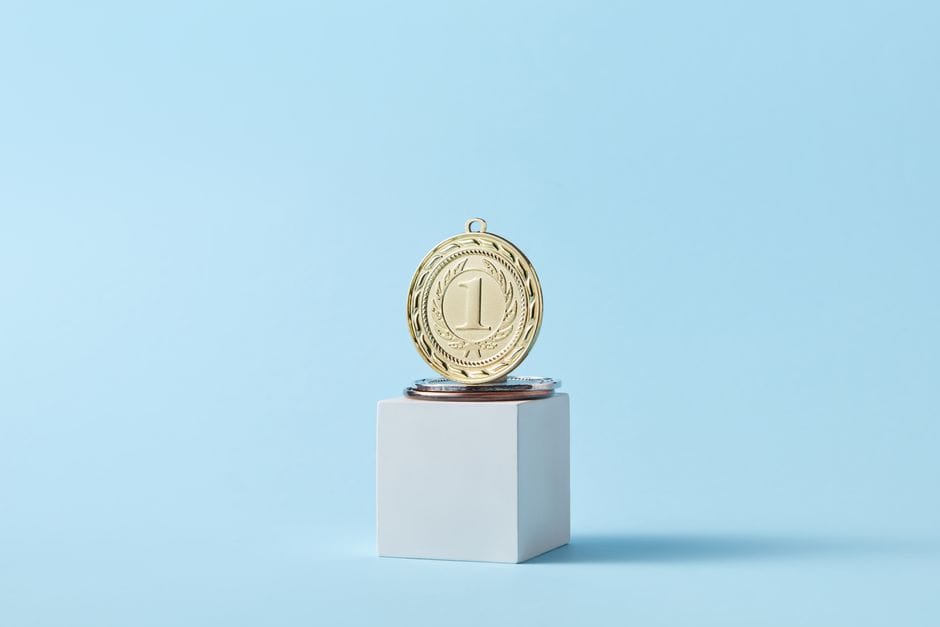
The nobel prize money currently stands at 11 million Swedish kronor per prize — roughly $1.2 million at the exchange rates reported when the 2025 winners were announced in October 2025. That figure comes straight from the Nobel Foundation, which publishes the amount on NobelPrize.org and repeats it in every prize press release.
- How much nobel prize money does a winner actually receive?
- The nobel prize money, year by year
- Who pays for it, and why it can change
- The rule that caps how many people can split it
- What winners do with the nobel prize money
- The medal can be worth more than the nobel prize money itself
- Taxes and the nobel prize money: how the rules generally work
- Frequently Asked Questions
The Nobel Foundation raised the award to 11 million kronor in 2023, up from 10 million, and it has stayed there for the 2023, 2024 and 2025 prize years. The Foundation sets the figure each autumn based on how its investments have performed, so the amount for any given year is confirmed shortly before the October announcements rather than fixed permanently.
One thing surprises most people: that headline number is per prize, not per person. If three scientists share the physics award, they split the same 11 million kronor. Below is how the system actually works, where the money comes from, and what real laureates have done with it — from paying off a mortgage to auctioning a gold medal for $103.5 million.
How much nobel prize money does a winner actually receive?
A full, unshared prize is 11 million Swedish kronor. That is what María Corina Machado of Venezuela was awarded when the Norwegian Nobel Committee announced her 2025 Peace Prize on October 10, 2025 — the only 2025 prize that went to a single person.
Shared prizes are the norm in the sciences. The 2025 Nobel Prize in Chemistry, Physics, and Physiology or Medicine press releases each state that the 11 million kronor is “to be shared equally between the laureates.” Three winners means roughly 3.67 million kronor each, or around $400,000 before any taxes.
The Sveriges Riksbank Prize in Economic Sciences in Memory of Alfred Nobel followed a different split in 2025. Per the official press release, one half went to Joel Mokyr and the other half was shared jointly by Philippe Aghion and Peter Howitt — so one laureate received twice what the other two did.
Every laureate also receives a gold medal and a diploma, regardless of how the cash divides. Those are personal and individual; only the nobel prize money gets carved up.
The nobel prize money, year by year
The award has not moved in a straight line. The Nobel Foundation cut it sharply in 2012 after investment losses, then rebuilt it over the following decade. Here are the milestone figures the Foundation and contemporary news coverage confirm:
| Year | Amount per prize (SEK) | What changed |
| 1901 | 150,782 | First Nobel Prizes awarded |
| 2011 | 10,000,000 | Level before the cut |
| 2012 | 8,000,000 | Cut 20% to shore up Foundation finances |
| 2017 | 9,000,000 | First increase after the cut |
| 2020 | 10,000,000 | Back to the pre-2012 level |
| 2023–2025 | 11,000,000 | Current amount |
The 1901 figure is not as small as it looks. The Nobel Foundation notes that the original prize was worth many times a professor’s annual salary at the time — Alfred Nobel’s intent was that a winner could work freely for years without needing other income.
Because the amount is denominated in kronor, the dollar value of the nobel prize money shifts with exchange rates. Reporting in October 2025 put 11 million kronor at roughly $1.2 million; the same kronor figure has been described as closer to $1.1 million in other years. The Foundation does not adjust for currency swings.
Who pays for it, and why it can change
Alfred Nobel’s 1895 will directed that his fortune be invested and the interest distributed annually as prizes. The Nobel Foundation manages that endowment today, and the annual award comes from investment returns — not from governments, universities, or donations.
That is exactly why the amount fluctuates. When returns lagged in the early 2010s, the Foundation reduced the prize by 20 percent as part of a broader effort to strengthen its finances. When the portfolio recovered, the award climbed back and then past its old level.
The economics prize is the odd one out. It was not in Nobel’s will; Sweden’s central bank, Sveriges Riksbank, established and funds it in Nobel’s memory, though it is awarded at the same amount and announced alongside the others.
The rule that caps how many people can split it
The Statutes of the Nobel Foundation are blunt on this point: “In no case may a prize amount be divided between more than three persons.” That single sentence shapes modern science prizes, where discoveries often involve dozens of collaborators.
The statutes also allow a prize to be split between two separate works, each judged worthy. That is how you get halves and quarters instead of clean thirds — the money follows the work, not a headcount.
Organizations can win the Peace Prize, and when they do, the money goes to the institution rather than an individual. The Peace Prize is also the only one awarded in Oslo by a Norwegian committee; the rest are awarded in Stockholm.
What winners do with the nobel prize money
The honest answer is: mostly ordinary things. Coverage by Live Science, TIME and Fox News has tracked laureates spending on mortgages, cars, tuition and savings accounts.
MIT physicist Wolfgang Ketterle, who shared the 2001 physics prize three ways, put his share toward a house and his children’s education. Phillip Sharp, co-winner of the 1993 medicine prize, bought a century-old Federal-style house. Frank Wilczek, a 2004 physics laureate, told reporters he did nothing special with it — the money went into savings.
Some choices are more memorable. British biochemist Richard Roberts reportedly used part of his 1993 prize to build a croquet lawn at his home. Marie and Pierre Curie put their 1903 physics prize money back into research, and Marie Curie won a second Nobel in chemistry in 1911.
📨 Get Free Sweepstakes Alerts
Free · No spam · Unsubscribe anytime
Albert Einstein’s case is the most-cited of all: under his divorce settlement, the money from his 1921 physics prize went to his first wife, Mileva Marić, and their sons.
Charitable giving is common. President Barack Obama donated his 2009 Peace Prize award to ten charities, including the Clinton-Bush Haiti Fund and the United Negro College Fund, according to CBS News and White House statements at the time. Chemistry laureate George P. Smith gave more than $243,000 from his 2018 prize to support students at the University of Missouri.
The medal can be worth more than the nobel prize money itself
Here is the fact that stops people cold. In June 2022, Russian journalist Dmitry Muratov auctioned his 2021 Nobel Peace Prize medal to benefit displaced Ukrainian children. It sold for $103.5 million, with proceeds going to UNICEF’s child refugee fund.
Muratov told reporters he had hoped it might reach $5 million. The previous record for a Nobel medal was $4.76 million, paid in 2014 when James Watson sold his — a sum that dwarfed the cash prize he originally received.
Those are outliers driven by circumstance and cause, not a market rate. Most medals are never sold, and the ones that have been auctioned typically fetch far less.
Taxes and the nobel prize money: how the rules generally work
In the United States, prizes and awards are generally treated as taxable income. IRS Publication 525 covers this category, and the 1986 Tax Reform Act ended the earlier exclusion that had kept Nobel awards out of taxable income.
There is a narrow provision in the tax code addressing certain prizes and awards that a recipient transfers to a governmental unit or qualifying charity before receiving them. Whether it applies in a given case depends on timing, documentation, and the recipient’s circumstances.
How any of this plays out for one person is a matter for a qualified tax professional and the official guidance at IRS.gov. This article describes how the rules are structured — nothing here is tax advice, and outcomes vary by individual situation and country of residence.
Foreign laureates face their own national rules, and Sweden does not withhold the award at the source. Two laureates declined their prizes outright: Jean-Paul Sartre turned down the 1964 literature prize, and Lê Đức Thọ refused the 1973 Peace Prize.
Frequently Asked Questions
How much is the nobel prize money in dollars?
About $1.2 million per full prize, based on the exchange rate when the 2025 winners were announced. The official amount is 11 million Swedish kronor, so the dollar figure moves with currency rates.
Do shared winners each get the full amount?
No. The 11 million kronor is per prize, not per person. Three laureates sharing equally receive about one-third each, though some prizes split by halves and quarters instead.
Has the nobel prize money ever gone down?
Yes. The Nobel Foundation cut it from 10 million to 8 million kronor in 2012 to strengthen its finances, then raised it in 2017, 2020 and 2023 to today’s 11 million.
Where does the nobel prize money come from?
Investment returns on the endowment Alfred Nobel left in his 1895 will, managed by the Nobel Foundation. The economics prize is separately funded by Sweden’s central bank, Sveriges Riksbank.
Want to put this knowledge to work?
Know the Rules Where You Live
Sweepstakes and prize rules change from state to state — what a sponsor can offer, how prizes are handled, and what protections you have. Pick your state to see the exact rules that apply where you live.
See Sweepstakes Laws in All 50 States →
Sources & How to Verify
The facts on this page are drawn from official government and primary sources. Rules and figures change, so always confirm the current details with the official agency or the promotion’s own published rules.
- FTC Consumer Advice: consumer.ftc.gov — prize, sweepstakes, and lottery scam guidance
- IRS: irs.gov — how prizes and winnings are treated as income
- Social Security Administration: ssa.gov — what SSI recipients must report
- The promotion’s official rules: every legitimate sweepstakes publishes them — the rules page is always the final word
Content last reviewed August 2026. If you notice outdated information, please contact us.
You May Also Like
Related Guides
- Sweepstakes Laws by State (50-State Guide)
- More in This Category
- Sweepstakes Resources
- Scam Checks
- Sweepstakes Tax Calculator
- All Active Sweepstakes
Informational only — not legal, tax, or financial advice. Win Big Daily is an independent educational resource. Prize rules, tax treatment, and benefit-program requirements vary by state and program and change over time, so always verify the current details with the official agency, the promotion’s published rules, or a qualified professional before acting. If a topic involves government benefits, contact the program office about your specific situation.