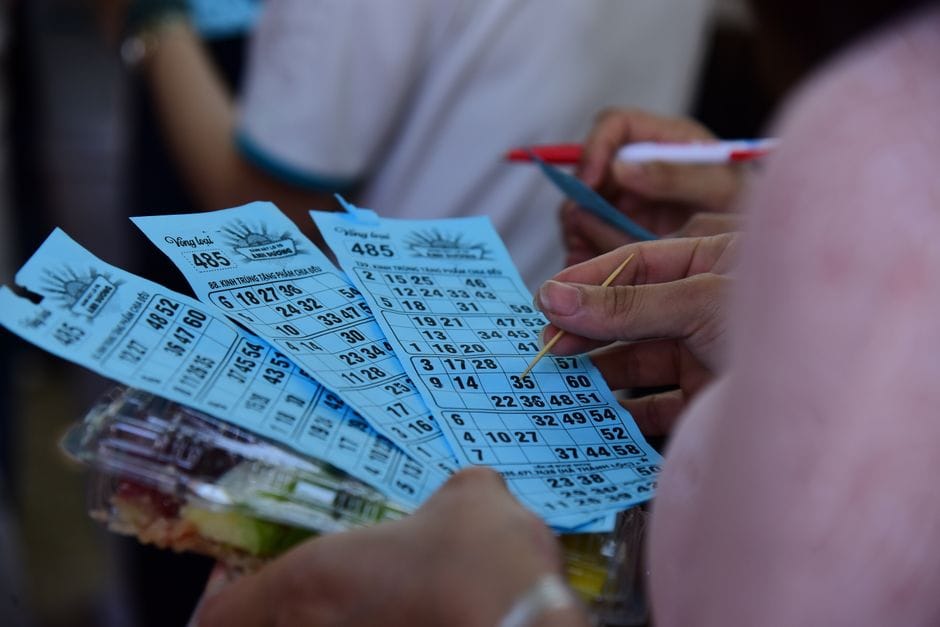
Raffle odds are usually thousands of times better than lottery odds, and the reason is simple: a raffle sells a fixed number of tickets, while a lottery sells combinations of numbers that can run into the hundreds of millions. Powerball’s jackpot odds are 1 in 292,201,338. The Minnesota Lottery’s 2026 Millionaire Raffle sold exactly one million tickets, and its published overall odds of winning something were 1 in 50.
- The current numbers, side by side
- Why raffle odds have a ceiling and lottery odds don’t
- The catch: better raffle odds usually mean smaller prizes
- Surprising-but-true details worth knowing
- Charity raffles: capped tickets, published limits
- How prize reporting generally works
- Spotting the fake version
- Frequently Asked Questions
That gap is not a trick or a loophole. It is arithmetic. In a capped raffle, the denominator is printed in the rules before you buy. In a jackpot game, the denominator is set by the number matrix, not by how many people play, so it never shrinks no matter how small the crowd is.
Below are the current, verified numbers from the lotteries and charities that publish them, followed by a plain explanation of why raffle odds behave so differently — and what that better chance actually buys you, which is usually a smaller prize.
The current numbers, side by side
Every figure here comes from the operator’s own published rules, news release, or prize chart. Powerball lists jackpot odds of 1 in 292,201,338 and overall odds of 1 in 24.87 on its official prize chart. Mega Millions improved its jackpot odds to 1 in 290,472,336 on April 8, 2025, when it removed one gold Mega Ball and raised the ticket price to $5, according to the Mega Millions announcement.
| Game | Ticket price | Tickets or combinations | Top-prize odds | Year / source |
|---|---|---|---|---|
| Powerball jackpot | $2 | 292,201,338 combinations | 1 in 292,201,338 | Powerball prize chart |
| Mega Millions jackpot | $5 | 290,472,336 combinations | 1 in 290,472,336 | Changed April 8, 2025 (was 1 in 302,575,350) |
| Minnesota Millionaire Raffle | $10 | 1,000,000 tickets | 1 in 500,000 for a $1M prize (2 offered) | 2026 game, MN Lottery |
| PA New Year’s Millionaire Raffle | $20 | 500,000 tickets | 1 in 125,000 for $1M or $100,000 | Jan. 3, 2026 drawing, PA Lottery |
| VA New Year’s Millionaire Raffle | $20 | 625,000 tickets | 1 in 125,000 for $1M (5 offered) | Jan. 1, 2026 drawing, VA Lottery |
Read the last three rows again. A shot at a million dollars at 1 in 125,000 is roughly 2,300 times better than Powerball’s jackpot odds. Same country, same week, wildly different math.
Why raffle odds have a ceiling and lottery odds don’t
A raffle is a closed pool. The Pennsylvania Lottery printed 500,000 tickets for its New Year’s Millionaire Raffle and no more, so once you hold one, your denominator can never grow. Nobody can dilute you.
A number-matrix lottery works the other way. Powerball asks you to pick five white balls from 69 and one red ball from 26. That produces 11,238,513 white-ball combinations, each pairable with 26 red balls, for 292,201,338 outcomes. Those outcomes exist whether one person plays or fifty million do.
So raffle odds are bounded by print runs, and lottery odds are bounded by combinatorics. That single structural difference explains almost everything else in this article.
The catch: better raffle odds usually mean smaller prizes
Nothing is free here. Minnesota’s 2026 raffle offered two $1 million prizes, five of $100,000, five of $50,000, five of $25,000 and 40 new $20,000 prizes, per the Minnesota Lottery — good money, but not a nine-figure jackpot.
Powerball can post jackpots in the hundreds of millions precisely because the odds are so long that the top prize rolls over for weeks. Long odds are what build giant jackpots. Short raffle odds are what keep prizes modest and frequent.
Also notice the entry price. Raffle tickets often cost $10, $20 or even $100, against $2 for Powerball. You are paying more per ticket for a meaningfully better chance at a smaller number.
Surprising-but-true details worth knowing
- Minnesota’s 2026 raffle sold out in 14 days — the fastest sellout in that game’s history, according to the Minnesota Lottery’s own news release. Selling out early means the raffle odds you were quoted are final.
- Mega Millions got better in 2025, which almost never happens. Removing a Mega Ball cut the jackpot denominator by about 12 million combinations, and the starting jackpot reset moved from $20 million to $50 million.
- Powerball’s overall odds of 1 in 24.87 sound thrilling until you learn most of those wins are the $4 and $7 tiers.
- In the St. Jude Dream Home Giveaway, secondary-prize winners are returned to the hopper for the house drawing, per the official rules — so winning early doesn’t remove you.
Charity raffles: capped tickets, published limits
Charity raffles show the same pattern. St. Jude sells Dream Home tickets at $100 each with a hard cap set per market — recent local campaigns have targeted figures in the 21,000-to-28,000 range, and several sold out. Against a house worth several hundred thousand dollars, those raffle odds are extraordinary compared with any jackpot game.
St. Jude’s rules also state plainly that the $100 ticket is not deductible as a charitable contribution for federal income tax purposes, because you received a chance to win in exchange. That surprises a lot of first-time buyers.
Charitable raffles are regulated at the state level, and legality, licensing and ticket caps vary. Check your state’s charitable gaming office for what applies where you live.
How prize reporting generally works
This is not tax advice, and your situation may differ — the IRS and a qualified professional are the right sources for your case. As a general description: the IRS instructions for Form W-2G say a payer withholds 24% on sweepstakes, wagering pool and lottery winnings when the amount, minus the wager, exceeds $5,000 and is at least 300 times the wager.
📨 Get Free Sweepstakes Alerts
Free · No spam · Unsubscribe anytime
The same instructions describe a $600 reporting threshold for lotteries and sweepstakes when the payout is at least 300 times the wager, and a higher rate for certain noncash prizes such as a car. Prizes are generally reportable income regardless of the raffle odds you beat to get them.
Spotting the fake version
Real raffles publish their ticket count, their prize list and their drawing date before you pay. Fake ones publish urgency. The FTC has repeatedly warned that legitimate prizes never require an upfront fee, and that the agency itself never collects money from consumers.
The FTC has also brought cases against operations that mailed letters claiming a consumer had won more than $2 million, then asked for a $20 to $30 fee to release it. If someone quotes you spectacular raffle odds but won’t name the ticket cap or show official rules, that is a signal worth acting on.
Legitimate state lotteries and established charities make this easy. The numbers are on the page, in writing, before your card comes out.
Frequently Asked Questions
Are raffle odds always better than lottery odds?
For the top prize, usually by a wide margin — 1 in 125,000 in Pennsylvania and Virginia versus 1 in 292,201,338 for Powerball. But Powerball’s overall odds of winning any prize, 1 in 24.87, beat many raffles’ overall odds because of its small $4 and $7 tiers.
Do my odds improve if a raffle doesn’t sell out?
In games with a fixed ticket count, unsold tickets can improve your real chances, since fewer competitors share the same prize pool. The published raffle odds assume a full sellout, so treat them as the conservative figure and read the rules for how unsold tickets are handled.
Why did Mega Millions odds change?
Mega Millions removed one gold Mega Ball on April 8, 2025, dropping the pool from 25 to 24 and improving jackpot odds to 1 in 290,472,336 from 1 in 302,575,350. The ticket price rose to $5 and a built-in multiplier replaced the old $1 Megaplier add-on.
Is a charity raffle ticket tax deductible?
St. Jude states in its Dream Home rules that the $100 ticket is not deductible as a charitable contribution for federal income tax purposes, because the buyer receives a chance to win. Rules differ by organization and situation, so check the charity’s published rules and IRS.gov for your circumstances.
Want to put this knowledge to work?
Know the Rules Where You Live
Sweepstakes and prize rules change from state to state — what a sponsor can offer, how prizes are handled, and what protections you have. Pick your state to see the exact rules that apply where you live.
See Sweepstakes Laws in All 50 States →
Sources & How to Verify
The facts on this page are drawn from official government and primary sources. Rules and figures change, so always confirm the current details with the official agency or the promotion’s own published rules.
- FTC Consumer Advice: consumer.ftc.gov — prize, sweepstakes, and lottery scam guidance
- IRS: irs.gov — how prizes and winnings are treated as income
- Social Security Administration: ssa.gov — what SSI recipients must report
- The promotion’s official rules: every legitimate sweepstakes publishes them — the rules page is always the final word
Content last reviewed August 2026. If you notice outdated information, please contact us.
You May Also Like
Related Guides
- Sweepstakes Laws by State (50-State Guide)
- More in This Category
- Sweepstakes Resources
- Scam Checks
- Sweepstakes Tax Calculator
- All Active Sweepstakes
Informational only — not legal, tax, or financial advice. Win Big Daily is an independent educational resource. Prize rules, tax treatment, and benefit-program requirements vary by state and program and change over time, so always verify the current details with the official agency, the promotion’s published rules, or a qualified professional before acting. If a topic involves government benefits, contact the program office about your specific situation.