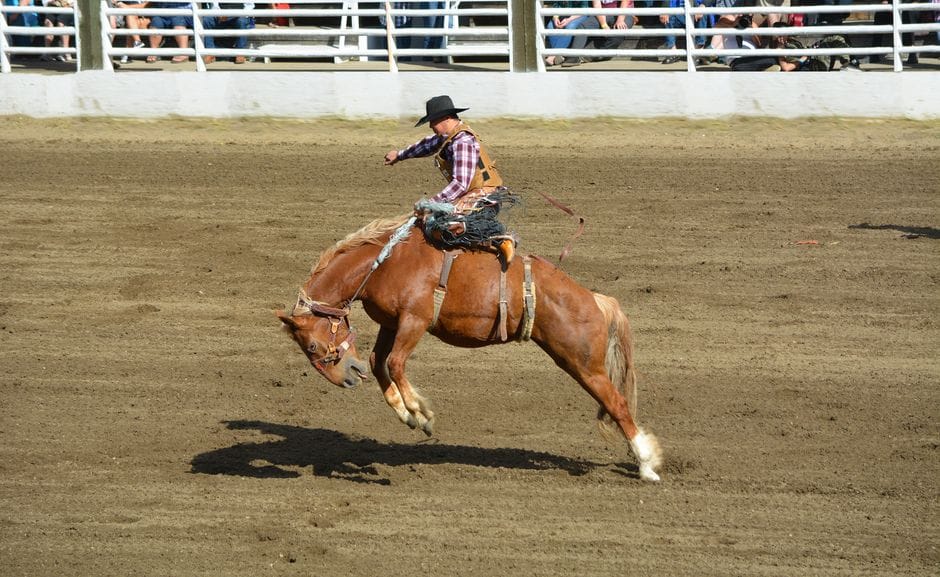
Rodeo prize money works differently from almost every other pro sport in America: there is no salary, no guaranteed contract, and no team paying your travel. Contestants pay an entry fee to compete, and the money they win comes largely out of the pot those entry fees create, plus whatever the local rodeo committee adds from sponsors. Win, and you get paid that night. Miss your ride, and you paid to be there.
The top-end numbers are real and getting bigger. The 2025 Wrangler National Finals Rodeo in Las Vegas paid a record $13,501,505 to contestants and $4,050,451 to stock contractors, according to the Professional Rodeo Cowboys Association and Las Vegas Events. That is more than $17.5 million over ten nights. Bareback rider Rocker Steiner finished 2025 with $507,532, breaking the single-season earnings record, as reported by Sports Illustrated’s rodeo coverage and the Western Sports Foundation.
Here is the part most casual fans miss. That headline rodeo prize money goes to roughly 120 people at one event in December. The PRCA sanctions more than 700 rodeos a year, and most contestants at most of them are competing for a few hundred to a few thousand dollars while covering their own fuel, fees, and vet bills. Both things are true at once.
Where rodeo prize money actually comes from
Every PRCA rodeo builds its purse from two buckets. The first is entry fees, paid by every contestant who competes. The second is “added money,” a contribution from the rodeo committee that usually comes from local sponsors and ticket revenue. Combine the two and you get the event purse, which is then split among the top finishers.
The PRCA describes pro rodeo as pay-to-play for exactly this reason. Nobody is on payroll. A contestant who enters six events across a weekend has already spent real money before a chute opens.
Multi-performance rodeos add another wrinkle called day money. Under PRCA practice, a portion of roughstock entry fees can be set aside as a per-performance payoff, split equally among riders who make a qualified ride that night. If you also place in the overall standings, you collect that on top.
The numbers at the top: the NFR and the gold buckle
The National Finals Rodeo takes the top 15 money winners in each event from the regular season and runs ten go-rounds. Recent NFRs have paid go-round winners more than $30,000 a night. At the 2023 NFR, round winners took home $30,706 and average (aggregate) winners earned $78,747, per PRCA payout figures.
Because the rounds and the average both pay, a hot ten nights can rewrite the season. Coverage of the 2025 NFR noted that roughly $275,000 was available to a contestant who won multiple rounds plus the average. That is why a cowboy sitting tenth in the standings in November can leave Las Vegas with a world title.
The world champion in each event is simply whoever has won the most total money across the season and the NFR combined. There is no separate championship bonus check in the PRCA — the gold buckle follows the money.
Rodeo prize money by the numbers
These are the current published figures from the sanctioning bodies and their announcements. Where a number changed recently, the newer one is listed.
| Figure | Amount | Year / Source |
| NFR contestant purse | $13,501,505 | 2025 — PRCA / Las Vegas Events |
| NFR stock contractor pay | $4,050,451 | 2025 — PRCA / Las Vegas Events |
| NFR contestant purse (prior year) | $12.5 million | 2024 — PRCA |
| NFR go-round winner | $30,706 | 2023 — PRCA payout page |
| NFR average (aggregate) winner | $78,747 | 2023 — PRCA payout page |
| PRCA single-season earnings record | $507,532 (Rocker Steiner) | 2025 — replaced $265,896 record |
| Calgary Stampede roughstock champion | $50,000 (2nd: $20,000, 3rd: $10,000) | 2025 — Calgary Stampede |
| RodeoHouston total athlete winnings | $2.5 million | 2025 — Houston Livestock Show and Rodeo |
| Cheyenne Frontier Days purse | $960,000 (up from $770,000) | 2026 — CFD announcement |
| PBR World Champion bonus | $1 million | 2025 — PBR |
| Total annual PRCA rodeo payout | $74.5 million | 2023 — PRCA |
What it costs to chase rodeo prize money
Entry fees at PRCA rodeos commonly run around $125 per event, and a contestant seriously chasing the standings enters roughly 100 rodeos a season. That alone is about $12,500 before anything else, and many enter more than one event per rodeo.
Then come the miles. Reporting on rodeo economics, including a Houston Chronicle piece on the real cost of the sport, describes seasons involving 75,000 to 100,000 miles of driving and total annual costs commonly in the $50,000 range — and $100,000 or more for contestants who fly to distant rodeos or haul and care for horses.
Run those numbers against the standings and the picture sharpens. A contestant has to clear roughly the cost of a decent household income in winnings just to break even on the season.
Bull riding runs on a different rodeo prize money system
Professional Bull Riders, a separate organization from the PRCA, structures its money more like traditional pro sports. PBR pays a flat $1 million bonus to its World Champion. At the 2025 PBR World Finals, the organization reported a record $3.26 million total purse across all three phases, with $350,000 to the event winner and $75,000 to each of the four championship-round winners.
📨 Get Free Sweepstakes Alerts
Free · No spam · Unsubscribe anytime
That means a bull rider can win a seven-figure check in a single afternoon, while a PRCA world champion in any event gets there by stacking hundreds of smaller checks. Same sport, very different rodeo prize money architecture.
Why most contestants never see the big checks
PRCA contestants are independent contractors. No base salary, no guaranteed contract, no employer health insurance. The Justin Sports Medicine Team provides on-site care at PRCA events, and the Justin Cowboy Crisis Fund helps contestants dealing with catastrophic injuries — a safety net that exists precisely because the standard employment one does not.
Reporting on the sport’s economics estimates only a modest share of card-holding contestants — commonly put at roughly 15 to 20 percent — make a full-time living from competition alone. The rest ranch, train horses, weld, or work day jobs between rodeos.
The surprising-but-true footnote: the money is on a long, contracted climb. Under the PRCA’s extension with Las Vegas Events, the combined contestant purse and stock contractor compensation rises about $1 million per year, reaching more than $27.5 million by 2035. Rodeo prize money at the top has never been on a clearer upward track.
Frequently Asked Questions
Do rodeo cowboys get a salary?
No. PRCA contestants are independent contractors paid only through award money. They pay their own entry fees and travel, and they earn nothing at a rodeo where they do not place.
How much rodeo prize money does a world champion win?
In the PRCA there is no separate title bonus — the champion is whoever wins the most money across the season plus the NFR. Rocker Steiner’s record 2025 total was $507,532. PBR is different: it pays its World Champion a flat $1 million bonus.
How much does one NFR round pay?
Recent go-round winners have earned more than $30,000 a night. The PRCA listed $30,706 for a 2023 round win and $78,747 for the ten-round average winner, and the overall purse has risen every year since.
Is rodeo prize money taxable?
Contest winnings are generally treated as income by the IRS, and payers may issue tax forms. Rules depend on your situation, so check IRS.gov or talk with a qualified tax professional about your own return.
Want to put this knowledge to work?
Know the Rules Where You Live
Sweepstakes and prize rules change from state to state — what a sponsor can offer, how prizes are handled, and what protections you have. Pick your state to see the exact rules that apply where you live.
See Sweepstakes Laws in All 50 States →
Sources & How to Verify
The facts on this page are drawn from official government and primary sources. Rules and figures change, so always confirm the current details with the official agency or the promotion’s own published rules.
- FTC Consumer Advice: consumer.ftc.gov — prize, sweepstakes, and lottery scam guidance
- IRS: irs.gov — how prizes and winnings are treated as income
- Social Security Administration: ssa.gov — what SSI recipients must report
- The promotion’s official rules: every legitimate sweepstakes publishes them — the rules page is always the final word
Content last reviewed August 2026. If you notice outdated information, please contact us.
You May Also Like
Related Guides
- Sweepstakes Laws by State (50-State Guide)
- More in This Category
- Sweepstakes Resources
- Scam Checks
- Sweepstakes Tax Calculator
- All Active Sweepstakes
Informational only — not legal, tax, or financial advice. Win Big Daily is an independent educational resource. Prize rules, tax treatment, and benefit-program requirements vary by state and program and change over time, so always verify the current details with the official agency, the promotion’s published rules, or a qualified professional before acting. If a topic involves government benefits, contact the program office about your specific situation.