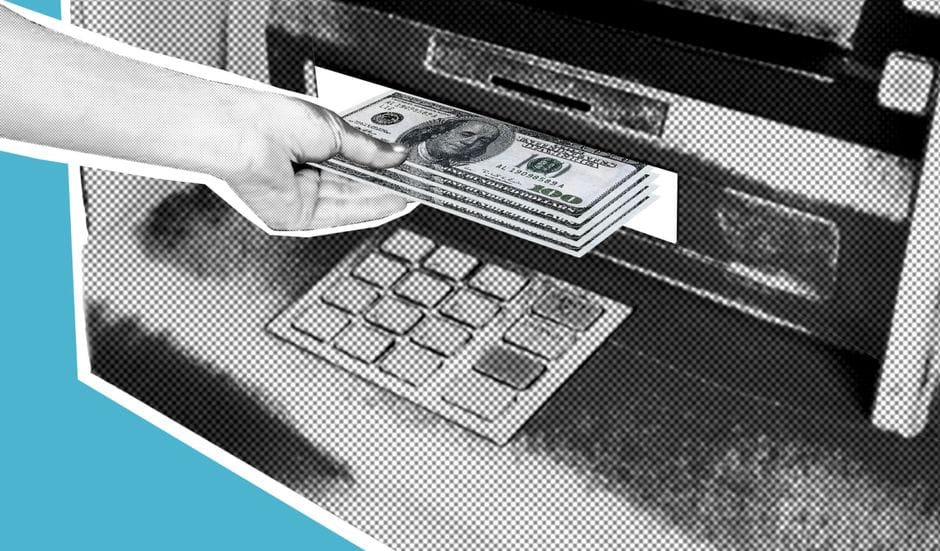
When an ATM gives extra money, the cash is not yours to keep — the bank will almost always discover the shortage during its next cash reconciliation, trace it to your withdrawal, and either debit your account or contact you to arrange repayment. The safest and simplest move is to call your bank the same day, report the exact amount, and let them document it.
- What Happens Inside the Bank When an ATM Gives Extra Money
- Why an ATM Gives Extra Money in the First Place
- What to Do in the First 24 Hours
- Can You Legally Keep It When an ATM Gives Extra Money?
- The Flip Side: When the ATM Shorts You Instead
- What Most People Get Wrong
- If You Receive Government Benefits, Report It the Normal Way
- Frequently Asked Questions
This surprises people, because it feels like the machine’s mistake. Legally, though, an ATM error does not transfer ownership of the money. The bank knows what it loaded into the cassette, what the machine says it dispensed, and what your account was debited. When those three numbers disagree, the gap has a name and a date on it.
Below is what actually happens step by step: how banks find the error, how long they have to act, what your rights are if the machine shorts you instead, and the handful of things most people get wrong. None of this is legal or tax advice — it is a plain description of how the process generally works.
What Happens Inside the Bank When an ATM Gives Extra Money
Every ATM keeps an electronic journal — a running log of each card, each transaction, each amount authorized and dispensed. Separately, the cash cassettes are counted when they are loaded and again when they are serviced. If the machine should hold $8,000 and holds $7,900, that $100 gap gets researched, not written off.
The research is straightforward. Staff match the journal to the account postings and find the transaction where the dispensed amount and the debited amount do not agree. Because your card and account are attached to that record, there is no mystery about who received the cash.
Timing varies by institution and by how often that particular machine is serviced. A busy branch ATM may balance daily; a remote machine may go longer between visits. That delay is why some people believe they got away with it — the discovery just hasn’t happened yet.
Why an ATM Gives Extra Money in the First Place
Most cases trace to a handful of ordinary causes rather than anything exotic:
- Miscalibrated cassettes. A cassette loaded with $20 bills but programmed as $10s will pay out double.
- Sticking notes. New or damp bills cling together and feed as one.
- Loading errors. Denominations placed in the wrong slot during servicing.
- Failed retract. Cash the machine tried to pull back but couldn’t.
- Software or communication faults between the terminal and the account system.
The cause matters less than the paper trail. Whatever the reason an ATM gives extra money, the electronic journal records what left the machine, and that record is what the bank works from.
What to Do in the First 24 Hours
Acting quickly protects you and makes the fix routine instead of adversarial. A reasonable sequence:
- Count the cash and keep the receipt. Note the date, time, ATM location, and the machine’s terminal ID if printed.
- Set the extra money aside. Don’t spend it or deposit it into a different account.
- Call the bank that issued your card and report the discrepancy. Ask for a case or reference number.
- Call the ATM owner too if it wasn’t your bank’s machine. The CFPB specifically advises contacting both when the ATM dispenses the wrong amount.
- Write down who you spoke to and when, and follow up in writing if asked.
If you can, return the cash in person at a branch and get a written receipt for it. A documented return is worth far more later than a phone call nobody logged.
Can You Legally Keep It When an ATM Gives Extra Money?
Generally, no. Two separate bodies of law apply, and both cut against keeping it.
On the civil side, courts commonly treat money transferred by mistake under the doctrine of unjust enrichment — the recipient may be required to return funds they were never entitled to. Outcomes depend heavily on state law and the facts of the case, and there are recognized defenses in narrow situations, so no one can promise a universal result.
On the criminal side, many states have statutes covering theft of lost or mislaid property. The pivotal element in those laws is usually intent: whether you knew the money wasn’t yours and decided to keep it anyway. Felony-versus-misdemeanor thresholds are set state by state and vary widely. To find yours, look up your state’s criminal code on the legislature’s official website or ask a licensed attorney in your state — do not rely on a figure from a national article.
The practical takeaway is simple. Reporting it promptly is what keeps a machine malfunction from turning into a dispute about your intent.
The Flip Side: When the ATM Shorts You Instead
The reverse problem — the machine debits $300 and hands you $200 — is covered by federal law. Under Regulation E, which implements the Electronic Fund Transfer Act, “the consumer’s receipt of an incorrect amount of money from an electronic terminal” is a defined error, and your bank must follow set procedures once you report it.
Here is how the two situations compare:
| Situation | ATM gives extra money | ATM gives too little |
| Who is out money | The bank or ATM owner | You |
| Governing rule | State property law and civil unjust-enrichment principles | Regulation E error resolution, 12 CFR 1005.11 |
| Your deadline | No federal deadline; report immediately | Report within 60 days of the statement first showing the error |
| Institution’s timeline | Set by bank policy | Investigate within 10 business days of notice |
| Temporary credit | Not applicable | Generally required if the investigation runs past 10 business days |
| Typical outcome | Account debited or repayment arranged | Credit restored if the error is confirmed |
Under Regulation E, the institution must investigate promptly and determine whether an error occurred within 10 business days of receiving your notice, and report the results to you within three business days after finishing. If it can’t finish in time, it may extend the investigation to 45 calendar days, but it generally must provisionally credit your account while it works. New accounts get longer windows — the CFPB notes 20 business days can apply for transfers within 30 days of the first deposit.
The CFPB also cautions that a bank can require written confirmation of an error you first reported by phone. If you’re asked for that and don’t provide it within 10 business days, the institution is not required to issue the temporary credit. If you’re unsatisfied with the response, the CFPB accepts complaints at consumerfinance.gov/complaint or by phone at (855) 411-CFPB (2372).
📨 Get Free Sweepstakes Alerts
Free · No spam · Unsubscribe anytime
What Most People Get Wrong
“If they don’t notice, it’s mine.” Reconciliation is a routine accounting process, not a manual hunt. The overage surfaces whether or not anyone is looking for you specifically.
“There’s a time limit and then I’m safe.” The 60-day clock in Regulation E is a deadline for you to report an error in your favor. It is not a statute of limitations protecting someone who kept a windfall when an ATM gives extra money.
“Spending it first makes it complicated.” It mostly makes it worse. If the bank debits the amount and the balance isn’t there, you can end up overdrawn and owing fees on top of the original sum.
“Third-party ATMs don’t count.” Independently owned machines still balance their cash, and the operator can pursue the shortage through the card network and your bank.
“It’s found money, so it’s tax-free.” The IRS treats genuinely found property as taxable income in the year it’s reduced to possession — see Publication 525. Money an ATM handed you by mistake isn’t found property to begin with, since it still belongs to the bank. Ask a tax professional about your own situation.
If You Receive Government Benefits, Report It the Normal Way
If your benefits are means-tested — SSI, SNAP, Medicaid, or a housing subsidy — reporting requirements generally apply to changes in your income and resources. An ATM error is unusual because the cash isn’t really yours, but that determination belongs to the agency, not to you or to an article.
Rules and reporting deadlines differ by program and by state. SNAP is administered by states under USDA Food and Nutrition Service rules, and Medicaid and housing programs vary by state and local agency, so there’s no single national figure to quote. Outcomes always depend on the program and your specific circumstances.
The reliable move is to contact the agency directly: SSA at ssa.gov or 1-800-772-1213, your state SNAP office through the USDA’s state directory at fns.usda.gov, and your local public housing authority through hud.gov. Explain that an ATM dispensed money in error and that you returned it, and ask what documentation they want.
Frequently Asked Questions
How long does a bank have to catch the error?
There’s no federal deadline for the bank’s side. It depends on how often that machine is balanced and serviced — sometimes the same day, sometimes weeks later. The absence of a call doesn’t mean the discrepancy went unrecorded.
Will the bank just take the money out of my account?
Often yes. Deposit agreements typically let the institution correct posting errors by debiting the account. Read your own account agreement, or call and ask how your bank handles it.
What if I already returned the cash and they debit me anyway?
Contact the bank with your return receipt and case number. If it isn’t resolved, you can submit a complaint to the CFPB at consumerfinance.gov/complaint or call (855) 411-CFPB (2372).
What if the ATM shorted me and my bank denies the claim?
Regulation E requires the institution to explain its findings in writing and to tell you that you may request the documents it relied on. Ask for those records, then escalate to the CFPB or your bank’s federal regulator if you still disagree.
Want to put this knowledge to work?
Know the Rules Where You Live
Sweepstakes and prize rules change from state to state — what a sponsor can offer, how prizes are handled, and what protections you have. Pick your state to see the exact rules that apply where you live.
See Sweepstakes Laws in All 50 States →
Sources & How to Verify
The facts on this page are drawn from official government and primary sources. Rules and figures change, so always confirm the current details with the official agency or the promotion’s own published rules.
- FTC Consumer Advice: consumer.ftc.gov — prize, sweepstakes, and lottery scam guidance
- IRS: irs.gov — how prizes and winnings are treated as income
- Social Security Administration: ssa.gov — what SSI recipients must report
- The promotion’s official rules: every legitimate sweepstakes publishes them — the rules page is always the final word
Content last reviewed August 2026. If you notice outdated information, please contact us.
You May Also Like
Related Guides
- Sweepstakes Laws by State (50-State Guide)
- More in This Category
- Sweepstakes Resources
- Scam Checks
- Sweepstakes Tax Calculator
- All Active Sweepstakes
Informational only — not legal, tax, or financial advice. Win Big Daily is an independent educational resource. Prize rules, tax treatment, and benefit-program requirements vary by state and program and change over time, so always verify the current details with the official agency, the promotion’s published rules, or a qualified professional before acting. If a topic involves government benefits, contact the program office about your specific situation.