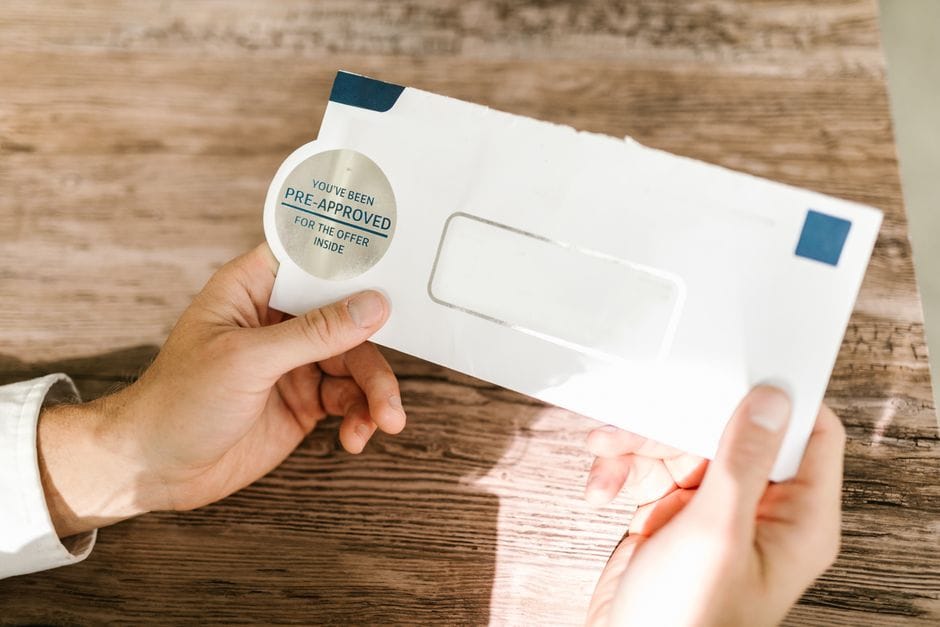
A check in the mail from a company you don’t remember, a “prize” you don’t remember entering, or an employer you just met online is almost always a fake — and the single fastest way to tell is to ask what happens next. If the sender wants you to deposit the check and then send part of the money somewhere else, by any method, it is a fake check scam.
- Why a check in the mail is almost never free money
- The five checks to run on a check in the mail
- What “the funds are available” actually means
- What most people get wrong
- When a surprise check in the mail is actually real
- What to do with a suspicious check in the mail
- How to protect yourself from the next one
- Frequently Asked Questions
According to the FTC, real prizes are free, and no legitimate employer, buyer, or sweepstakes sponsor needs you to move their money for them.
That’s the short answer. The longer answer matters because fake checks are genuinely hard to spot. The FTC says fake checks generally look just like real checks, even to bank employees, and are often printed with the real names and addresses of legitimate financial institutions. Some are printed on stolen check stock. Some are real checks stolen from someone else’s mailbox.
So the test isn’t the paper. It’s the request attached to it, plus a few verification steps you can do yourself in about fifteen minutes. Below is exactly how to work through a suspicious check in the mail, what your bank’s timeline really means, and what to do if you already deposited it.
Why a check in the mail is almost never free money
Unsolicited checks arrive for a reason, and the reason is usually that someone wants something from you. The FTC’s fake check pages describe the same pattern over and over: a person you don’t know sends a check, usually for more than they owe you, and asks you to send some of the money back to them or on to a third party.
The FTC lists several standard versions. A mystery-shopping “assignment” where you evaluate a gift card or wire-transfer service. A personal-assistant job where you buy gift cards and text the PINs to your “boss.” A sweepstakes that says you’ve won but needs money first for taxes, shipping and handling, or processing fees.
On that last one, the FTC is blunt: if you have to pay to get your prize, it’s a scam. There is no legitimate reason to send a bank account number, a card number, or a Social Security number to claim a prize.
The five checks to run on a check in the mail
Work through these in order. Most fakes fail at step one or two.
- Ask what they want you to do with the money. Any instruction to send part of it onward — wire, gift cards, crypto, a payment app, cash by mail — ends the analysis. The FTC says never use money from a check to send gift cards, money orders, cryptocurrency, or wire transfers to someone who asks.
- Call the bank named on the check. Not the phone number printed on the check or in the letter. Look up the bank yourself and ask whether the account and check number are valid.
- Look up the sender independently. Search the company name plus “scam.” Check whether the address on the letter matches the company’s real address.
- Check whether you ever entered anything. If you can’t remember entering a sweepstakes, you probably didn’t.
- Read the pressure. Urgency, secrecy, and “deposit it today” are the tells. Real money is patient.
If it’s a U.S. Treasury check, there are physical features you can verify. The Treasury’s published security guidance says every genuine Treasury check is printed on watermarked paper reading “U.S. Treasury,” visible only when held up to the light, and the Treasury seal uses ink that turns red when exposed to moisture. A Treasury check with no watermark, or a watermark you can see without backlighting, should be treated as suspect.
What “the funds are available” actually means
This is the trap. Federal funds-availability rules require your bank to release money on a schedule — but releasing it is not the same as the check clearing. The FTC’s warning is exact: even if you see the funds in your account, that doesn’t mean it’s a good check. Weeks can pass before the check comes back as counterfeit, and by then the money you forwarded is gone.
Here is roughly how the two timelines diverge, using the Regulation CC thresholds that took effect July 1, 2025.
| Stage | Typical timing | What it means |
| First $275 of a check deposit | Next business day after deposit, under Regulation CC | Spendable — not verified |
| Remainder, standard deposit | Generally by the second business day | Spendable — still not verified |
| Amounts above $6,725 in one day | Bank may hold the excess longer | Large-deposit exception applies |
| Exception holds (new accounts, redeposits, doubtful collectability) | Generally available no later than the seventh business day, per OCC guidance | Bank flagged something |
| Counterfeit discovered | Days to weeks later | Bank reverses the deposit |
The OCC notes that when a bank places a hold, it generally should give you written notice. Your own bank’s schedule can be faster than the federal minimum, so ask them directly about your account.
What most people get wrong
Three beliefs cause most of the losses.
“My bank cashed it, so it’s good.” No. Your bank advanced you money against a check it hasn’t collected yet. If the check is counterfeit, that advance gets reversed and the balance is generally yours to repay.
“A cashier’s check can’t bounce.” Counterfeit cashier’s checks are common in fake check scams. The OCC addresses this directly — a cashier’s check deposit is still subject to holds and can still be returned.
“It came in the mail, so it’s official.” Mail volume is no signal of legitimacy, and using the mail to run the scheme is itself a federal issue handled by the U.S. Postal Inspection Service.
When a surprise check in the mail is actually real
Real unexpected checks do exist, and they share one trait: nobody asks you for anything.
📨 Get Free Sweepstakes Alerts
Free · No spam · Unsubscribe anytime
- Class-action settlement payments. These follow a court-approved process, and the case name printed on the check can be looked up in public court records or on the settlement administrator’s official site.
- Rebates and refunds from a purchase or claim you actually filed.
- Unclaimed property from your state. Every state runs an unclaimed property program, but the rules, dollar thresholds, and whether the state mails checks at all vary by state. Verify through your own state treasurer’s or comptroller’s official unclaimed property site rather than trusting a letter.
Also worth saying plainly: if unexpected money could interact with a benefits program you’re enrolled in — SSI, SNAP, Medicaid, Section 8, and similar — reporting requirements generally apply, and how a payment is treated depends on the program and your specific situation. Ask the agency that administers your case, such as SSA or your state benefits office, rather than guessing.
What to do with a suspicious check in the mail
If you haven’t deposited it: don’t. Keep the check, the envelope, and every message. The Postal Inspection Service advises keeping all original documents, including mailing envelopes, because investigations are built on the pattern of complaints received.
Then report it. The FTC takes reports at ReportFraud.ftc.gov. The U.S. Postal Inspection Service takes mail fraud reports at uspis.gov/report or 1-877-876-2455.
If you already deposited a check in the mail and sent money onward, call your bank immediately and tell them what happened. Ask what your options are and request copies of the checks. Report it to the FTC and USPIS, and file a report with your local police department. Speed matters — the sooner the bank knows, the more they may be able to do.
How to protect yourself from the next one
The FTC’s underlying rule is simple: don’t rely on money from a check unless you know and trust the person you’re dealing with. Scale that into habits. Treat any unsolicited check in the mail as unverified until a phone call to the issuing bank says otherwise. Never let someone else’s deadline set your timeline.
Scams built on payments are enormous. The FTC reported consumers lost more than $12.5 billion to fraud in 2024, a 25% increase over the prior year, across 6.5 million Consumer Sentinel reports. A single unopened envelope isn’t worth becoming part of that number.
And if you’re not sure, sit on it. A real check in the mail will still be real next week. A fake one just loses its window.
Frequently Asked Questions
Can I get in trouble for depositing a fake check in the mail?
If you deposited it unknowingly, you’re a victim, not a suspect. The practical problem is financial: when the check is returned as counterfeit, the bank reverses the deposit and the balance is generally yours. Tell your bank as soon as you suspect a problem and ask about your specific account.
How long does it take for a fake check to be discovered?
The FTC says it can take weeks for a bank to figure out that a check is fake. That’s the whole point of the scam — the funds appear available long before the check is actually collected, which is why the FTC warns that seeing the money in your account proves nothing.
Is a check in the mail from a real bank’s name automatically legitimate?
No. The FTC notes fake checks are often printed with the names and addresses of legitimate financial institutions. Using a real bank’s name costs a counterfeiter nothing. Look up that bank’s phone number independently and ask them to verify the account and check number.
Who should I report a suspicious check in the mail to?
Report to the FTC at ReportFraud.ftc.gov and to the U.S. Postal Inspection Service at uspis.gov/report or 1-877-876-2455. If you deposited it or sent money, contact your bank right away and file a report with your local police department as well.
Want to put this knowledge to work?
Know the Rules Where You Live
Sweepstakes and prize rules change from state to state — what a sponsor can offer, how prizes are handled, and what protections you have. Pick your state to see the exact rules that apply where you live.
See Sweepstakes Laws in All 50 States →
Sources & How to Verify
The facts on this page are drawn from official government and primary sources. Rules and figures change, so always confirm the current details with the official agency or the promotion’s own published rules.
- FTC Consumer Advice: consumer.ftc.gov — prize, sweepstakes, and lottery scam guidance
- IRS: irs.gov — how prizes and winnings are treated as income
- Social Security Administration: ssa.gov — what SSI recipients must report
- The promotion’s official rules: every legitimate sweepstakes publishes them — the rules page is always the final word
Content last reviewed August 2026. If you notice outdated information, please contact us.
You May Also Like
Related Guides
- Sweepstakes Laws by State (50-State Guide)
- More in This Category
- Sweepstakes Resources
- Scam Checks
- Sweepstakes Tax Calculator
- All Active Sweepstakes
Informational only — not legal, tax, or financial advice. Win Big Daily is an independent educational resource. Prize rules, tax treatment, and benefit-program requirements vary by state and program and change over time, so always verify the current details with the official agency, the promotion’s published rules, or a qualified professional before acting. If a topic involves government benefits, contact the program office about your specific situation.