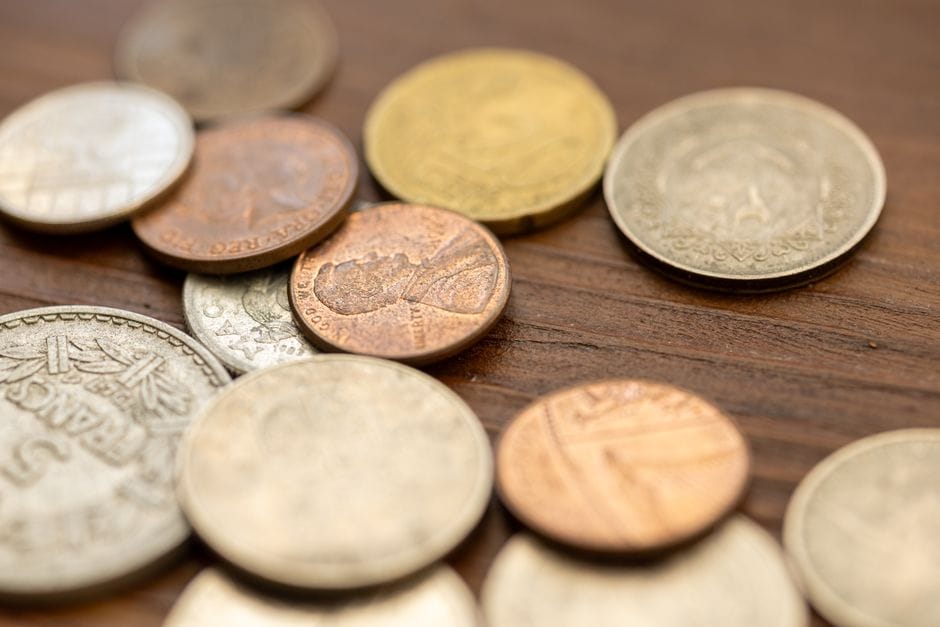
If you’re wondering whether you have old coins worth money sitting in a jar, the fastest answer is this: check the date first. For most U.S. coins found in change, drawers, or an inherited collection, the value comes down to metal content, and metal content is decided almost entirely by the year stamped on the coin. Dimes, quarters, and half dollars dated 1964 or earlier were struck in 90% silver, and 10% copper.
- How to Tell If You Have Old Coins Worth Money
- The Date Cutoffs That Decide Most Old Coins Worth Money
- Errors and Low-Mintage Coins: Where the Big Numbers Come From
- What Most People Get Wrong About Old Coins Worth Money
- How to Get a Real Value Before You Sell
- Taxes, Legal Limits, and Avoiding Coin Scams
- Frequently Asked Questions
That single fact separates ordinary pocket change from coins worth many times face value.
Beyond silver, a much smaller group of coins carries value because of rarity or a minting error. These are the ones that make headlines, and they are genuinely uncommon. According to the U.S. Mint, only about 40 of the famous 1943 copper-alloy cents are known to exist, out of more than a billion cents struck that year. Real finds happen, but they are the exception, not the rule.
This guide walks through what to check, in what order, and how to get a number you can trust before you sell anything. It also covers what most people get wrong, what the IRS says about gains on collectibles, and where federal law actually limits what you can do with coins you own.
How to Tell If You Have Old Coins Worth Money
Work through your coins in a fixed order. Sorting by date and denomination first will resolve the great majority of them in a few minutes, without any equipment beyond good light.
- Read the date. Dimes, quarters, and half dollars dated 1964 or earlier are 90% silver.
- Check half dollars from 1965 through 1970. Under the Coinage Act of 1965, these kept a reduced 40% silver content.
- Look at nickels from 1942 to 1945. Wartime nickels struck in 35% silver carry a large P, D, or S mint mark above Monticello on the reverse — a design feature used only in those years.
- Sort cents by 1982. Cents from 1909 to 1982 were 95% copper; from 1982 onward they are copper-plated zinc, 97.5% zinc with a 2.5% copper plating.
- Set aside anything odd — doubled lettering, a missing mint mark, an off-center strike, or a coin that looks wrong for its date.
Sorting this way tells you which pieces are worth a closer look and which are simply face value. It is the same first pass a dealer makes.
The Date Cutoffs That Decide Most Old Coins Worth Money
Most old coins worth money in an average household fall into a short list of date ranges. The table below summarizes the composition changes that matter, along with the silver weight per coin in troy ounces.
| Coin | Years | Composition | Silver per coin |
| Dime | 1964 and earlier | 90% silver | about 0.0723 oz |
| Quarter | 1964 and earlier | 90% silver | about 0.1808 oz |
| Half dollar | 1964 | 90% silver | about 0.3617 oz |
| Half dollar | 1965–1970 | 40% silver clad | roughly 0.1479 oz |
| Nickel | Late 1942–1945 | 35% silver, 56% copper, 9% manganese | about 0.0563 oz |
| Cent | 1909–1982 | 95% copper (1943: zinc-coated steel) | none |
Silver prices move daily, so the melt value of these coins moves with them. Don’t rely on a figure you read months ago. Check a current spot price the day you plan to sell, and remember that dealers buy below spot and sell above it.
Errors and Low-Mintage Coins: Where the Big Numbers Come From
The record-setting old coins worth money are almost always errors or scarce dates rather than common silver. The 1943 copper cent is the best-known example. During World War II the Mint switched cents to zinc-plated steel to conserve copper, but a few leftover copper blanks were struck by mistake.
The U.S. Mint says roughly 40 are known to survive, and the American Numismatic Association describes it as one of the most sought-after items in American numismatics. Authenticated examples have sold for well over a million dollars depending on condition. Fakes are common — steel cents plated with copper, or 1948 cents with the 8 altered to a 3.
Other categories that draw serious interest include doubled-die cents, off-metal strikes, and coins from mints that produced very small quantities in a given year. In every case, value depends on independent authentication. An error you identify yourself is a lead, not a valuation.
What Most People Get Wrong About Old Coins Worth Money
Cleaning them. This is the single most costly mistake. Grading services examine every submitted coin to confirm it has not been cleaned or enhanced, and a cleaned surface can sharply reduce what a coin brings. Polishing a coin does not make it more valuable.
Assuming old equals valuable. A worn 1940s wheat cent is common. Age alone does not create scarcity — mintage, condition, and demand do.
Trusting online “value” charts. Published price guides quote coins in specific grades. A coin that looks fine to you may grade several points lower, and the price gap between grades can be enormous.
Melting coins. Under 31 C.F.R. Part 82, melting or exporting U.S. one-cent and five-cent coins is prohibited, with penalties of up to $10,000 and up to five years imprisonment. The rule was put in place in December 2006 when metal values exceeded face value.
📨 Get Free Sweepstakes Alerts
Free · No spam · Unsubscribe anytime
How to Get a Real Value Before You Sell
For anything you think might be significant, third-party grading is the standard. PCGS and NGC both authenticate the coin, assign a grade on the 70-point Sheldon scale developed in 1949, and seal it in a tamper-evident holder with a certification number. NGC is the official grading service of the American Numismatic Association, the only coin collecting organization chartered by Congress.
For common silver, grading usually isn’t worth the fee — those coins trade close to melt. Get quotes from two or three established local dealers and compare. Fees, turnaround times, and minimum values vary by service and by dealer, so ask before you submit.
Taxes, Legal Limits, and Avoiding Coin Scams
The IRS treats coins as collectibles. Under IRS Topic No. 409, net capital gains from selling collectibles are taxed at a maximum 28% rate, higher than the 15% or 20% long-term rates that apply to most investments. If your ordinary rate is below 28%, your regular rate applies instead. State tax treatment varies — check your state’s revenue department. This is general information, not tax advice; talk to a tax professional about your own return.
On scams, the FTC warns that fraudulent “rare coin merchants” manufacture urgency, lie about their credentials, and push you to act fast. The FTC also notes that collectible coins carry higher markups than bullion and are far less liquid, so you may have to sell at a loss if no buyer values them as you do. Legitimate dealers will let you take your time and get a second quote.
Frequently Asked Questions
How do I know if my quarter is silver?
Check the date. Quarters dated 1964 or earlier are 90% silver. Silver coins also show a solid silver edge, while later clad quarters show a copper stripe along the rim.
Are wheat pennies old coins worth money?
Most circulated wheat cents are worth only a few cents above face. Value concentrates in scarce dates, mint marks, and errors — and in high grades. Sort by date and mint mark before assuming.
Should I get my coins graded?
Grade coins you believe are scarce, in strong condition, or possible errors. For common 90% silver that trades near melt, grading fees usually exceed any gain. Ask a dealer which of yours justify submission.
Where can I sell old coins worth money?
Options include local coin dealers, major auction houses for high-value pieces, and coin shows. Get more than one offer. Bring a written inventory, and never let anyone rush you into selling on the spot.
Want to put this knowledge to work?
Know the Rules Where You Live
Sweepstakes and prize rules change from state to state — what a sponsor can offer, how prizes are handled, and what protections you have. Pick your state to see the exact rules that apply where you live.
See Sweepstakes Laws in All 50 States →
Sources & How to Verify
The facts on this page are drawn from official government and primary sources. Rules and figures change, so always confirm the current details with the official agency or the promotion’s own published rules.
- FTC Consumer Advice: consumer.ftc.gov — prize, sweepstakes, and lottery scam guidance
- IRS: irs.gov — how prizes and winnings are treated as income
- Social Security Administration: ssa.gov — what SSI recipients must report
- The promotion’s official rules: every legitimate sweepstakes publishes them — the rules page is always the final word
Content last reviewed August 2026. If you notice outdated information, please contact us.
You May Also Like
Related Guides
- Sweepstakes Laws by State (50-State Guide)
- More in This Category
- Sweepstakes Resources
- Scam Checks
- Sweepstakes Tax Calculator
- All Active Sweepstakes
Informational only — not legal, tax, or financial advice. Win Big Daily is an independent educational resource. Prize rules, tax treatment, and benefit-program requirements vary by state and program and change over time, so always verify the current details with the official agency, the promotion’s published rules, or a qualified professional before acting. If a topic involves government benefits, contact the program office about your specific situation.