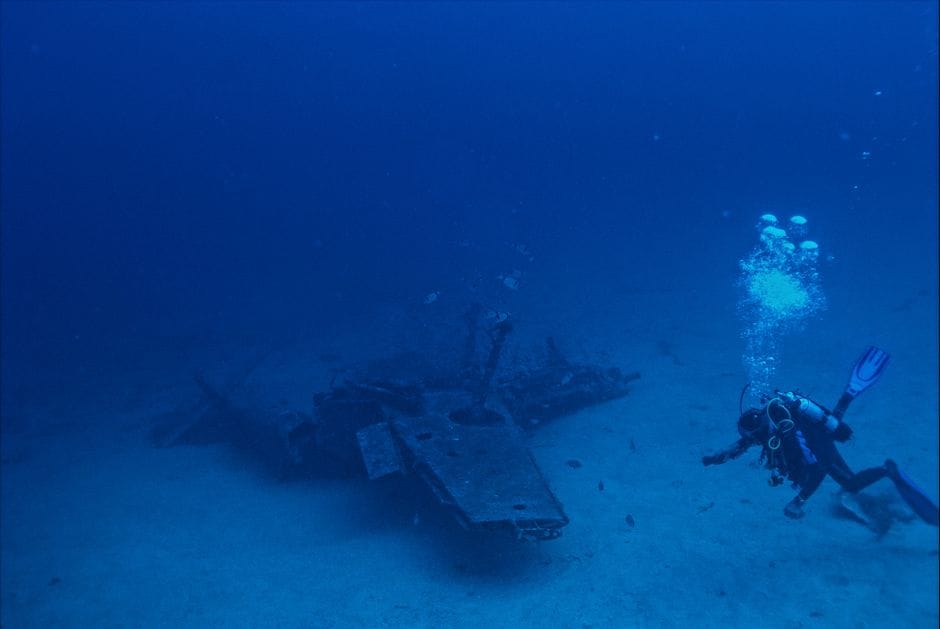
Shipwreck treasure almost never belongs to the person who finds it. In United States waters, the default answer is that a shipwreck and everything in it still has an owner — a state government, the federal government, a foreign nation, an insurance company that paid out the loss centuries ago, or the descendants of the original owners. “Finders keepers” is not the rule underwater, and divers who assume otherwise have lost the artifacts, paid fines, and in some cases faced criminal charges.
- Who Owns Shipwreck Treasure Under US Law
- The Three-Mile Line and Why Location Decides Everything
- Sunken Warships Are Never Abandoned
- Salvage Versus Finds: How Courts Divide Shipwreck Treasure
- What to Do Step by Step If You Find Something
- Taxes on Shipwreck Treasure and Other Found Property
- What Most People Get Wrong About Shipwreck Treasure
- Frequently Asked Questions
Here is the short version. If you find a wreck inside state waters, the Abandoned Shipwreck Act of 1987 generally hands title to the state. If it is a sunken US warship or military aircraft, the Navy owns it forever, no matter where it sits or how much time has passed. If it is in deep international water, admiralty courts decide between the law of salvage and the law of finds — and even then, the original owner usually gets a say.
What you actually get, in most real cases, is not the gold. It is a salvage award, a permit, a contract share, or nothing at all. This guide walks through who owns what, how the process works, what you should do the moment you find something, and where the rules vary by state so you know exactly which agency to call.
Who Owns Shipwreck Treasure Under US Law
Ownership turns on three questions: where the wreck is, whether it was truly abandoned, and who originally owned the vessel. Get those three answers and you can usually predict the outcome.
Under the Abandoned Shipwreck Act of 1987, the National Park Service explains that the US government asserted title to three classes of abandoned shipwrecks in state waters, then transferred that title to the state that owns the submerged land. So a qualifying abandoned wreck on a state’s bottomlands is state property from the moment it is found.
The three covered classes are wrecks embedded in submerged lands, wrecks embedded in state-protected coralline formations, and wrecks on submerged lands that are listed in or eligible for the National Register of Historic Places. A modern fishing boat that sank last year is not covered — that is still someone’s insured property.
The Three-Mile Line and Why Location Decides Everything
State waters generally run three nautical miles from shore. The National Park Service notes an important exception: for Texas, the Gulf coast of Florida, and Puerto Rico, the line extends three marine leagues — about nine nautical miles.
Inside that line, state law and the Abandoned Shipwreck Act govern. Outside it, you are in federal and then international waters, where admiralty law takes over. A wreck sitting a few hundred yards on either side of that boundary can land in completely different legal worlds.
Federal land and federal waters add another layer. The Archaeological Resources Protection Act of 1979 covers archaeological resources on public and tribal lands, and the National Park Service says a first offense involving resources valued over $500 carries a fine of up to $20,000 and up to two years in prison, with metal detectors and vehicles subject to forfeiture.
| Where you found it | Who most likely owns it | Who to contact |
| Within ~3 nautical miles of shore | The state (abandoned historic wrecks) | State historic preservation office or marine resources agency |
| Texas, Gulf coast of Florida, Puerto Rico | The state, out to ~9 nautical miles | State historical resources division |
| Any US or foreign sunken warship | The originating government, permanently | Naval History and Heritage Command |
| Inside a national marine sanctuary | Protected resource; permit required | NOAA Office of National Marine Sanctuaries |
| Federal or tribal land underwater | Federal government under ARPA | Managing federal agency |
| International waters | Contested — admiralty court decides | A maritime attorney, before you touch it |
Sunken Warships Are Never Abandoned
This is the rule that surprises divers most. The Sunken Military Craft Act, enacted October 28, 2004, codifies permanent US ownership of sunken military craft regardless of location or the passage of time. A Navy wreck from 1942 is still Navy property in 2026.
The Naval History and Heritage Command manages more than 17,000 Navy ship and aircraft wrecks worldwide, and they may not be disturbed without Navy permission. The law also protects foreign sunken military craft lying in US waters. Many of these sites are war graves, which is a large part of why the protection is absolute.
National marine sanctuaries carry their own rules. NOAA’s Office of National Marine Sanctuaries says the National Marine Sanctuaries Act authorizes civil penalties of up to $130,000 per day per violation, and each day of a continuing violation counts separately.
Salvage Versus Finds: How Courts Divide Shipwreck Treasure
In admiralty court, two doctrines compete. The law of salvage assumes the property still has an owner and pays the salvor for rescuing it. The law of finds treats truly abandoned property as belonging to whoever reduces it to possession. Courts strongly prefer salvage.
A salvage claim requires three elements: marine peril, service voluntarily rendered, and success in whole or in part. Courts then set an award based on the value recovered, the risk taken, and the skill involved. Reported awards commonly land somewhere in the range of roughly 10 to 25 percent of recovered value, though the number is discretionary and varies case by case.
The Abandoned Shipwreck Act removes covered state-owned wrecks from that system entirely. The National Park Service notes the Act specifies that the laws of salvage and finds do not apply to abandoned shipwrecks claimed by government under the Act.
The Odyssey Marine case shows how badly this can go for a finder. Odyssey recovered roughly 594,000 coins from a wreck later identified as the Spanish frigate Nuestra Señora de las Mercedes. The Eleventh Circuit affirmed against Odyssey on September 21, 2011, the Supreme Court declined the appeal on May 14, 2012, and the entire recovery went to Spain.
What to Do Step by Step If You Find Something
- Do not remove anything. Removal is the act that triggers most penalties. Documentation does not.
- Record the position and photograph in place. Depth, coordinates, and context matter more than the object.
- Identify the jurisdiction. Inside three miles is almost certainly a state matter. Sanctuaries and federal lands have their own managers.
- Report it. Contact your state’s historic preservation office or archaeology bureau. For anything that looks military, contact the Naval History and Heritage Command.
- Ask about permits and agreements. States run permitted or leased salvage programs. Florida’s arrangement with 1715 Fleet-Queens Jewels, for example, gives the state a share of recovered artifacts for its collections.
- Talk to a maritime attorney before filing anything. Admiralty claims are technical and deadlines matter.
Reporting requirements and finder’s rights vary substantially by state, and some states also treat objects over a certain age on state land as public property. Do not rely on a number you read online for your state — call the state agency directly and ask what applies to your specific find.
Taxes on Shipwreck Treasure and Other Found Property
This part catches people off guard. Under IRS rules described in Publication 525, if you find and keep property that does not belong to you that has been lost or abandoned, it is taxable at fair market value in the first year it is your undisputed possession.
📨 Get Free Sweepstakes Alerts
Free · No spam · Unsubscribe anytime
Treasury Regulation section 1.61-14 states the same principle: treasure trove is gross income for the taxable year in which it is reduced to undisputed possession. The leading case, Cesarini v. United States, involved cash found inside a used piano and turned on the year of discovery, not the year the money was hidden.
The practical takeaway is that a court-awarded salvage share or a legally recognized find can create a real tax bill in a year when you may have no cash to pay it. This is general information, not tax advice — talk to a CPA or tax attorney about your own situation before you act.
What Most People Get Wrong About Shipwreck Treasure
“It’s been down there 300 years, so it’s abandoned.” Time alone does not create abandonment. Spain won the Mercedes case on sovereign immunity, and the Sunken Military Craft Act explicitly says the passage of time changes nothing.
“International waters means no rules.” Admiralty jurisdiction follows the salvor. Courts can and do assert jurisdiction over an entire wreck after a salvor brings a single representative artifact into a US district court.
“A small souvenir won’t matter.” Sanctuary and ARPA penalties do not scale down to hobby size, and equipment forfeiture is on the table.
“Reporting means I get nothing.” Reporting is often the only path to a legally recognized share. Concealment converts a possible award into a possible criminal case.
“Beach finds and wreck finds follow the same rules.” A modern ring on the sand is usually handled under state lost-property law — typically turned over to police for a holding period. Historic shipwreck treasure is a different legal category entirely.
Frequently Asked Questions
Can I ever legally keep shipwreck treasure I find?
Sometimes, through a court-approved salvage award or a state salvage permit or lease that specifies your share. Outright ownership by a recreational diver is rare. The path runs through reporting and legal process, not through quietly keeping the object.
Does the three-mile rule apply everywhere in the US?
No. The National Park Service notes that for Texas, the Gulf coast of Florida, and Puerto Rico the line extends three marine leagues, roughly nine nautical miles. Boundaries and state rules vary, so confirm with your state’s marine or historical resources agency.
What happens if I find a sunken military wreck?
Leave it undisturbed and report it. The Sunken Military Craft Act of 2004 makes sunken US military craft permanent government property regardless of location or elapsed time, and the Naval History and Heritage Command must authorize any disturbance.
Is a salvage award taxable income?
Generally yes. IRS Publication 525 treats found property you keep as taxable at fair market value in the first year of undisputed possession, and awards for services are ordinary income. Your specific treatment depends on the facts — consult a tax professional.
Want to put this knowledge to work?
Know the Rules Where You Live
Sweepstakes and prize rules change from state to state — what a sponsor can offer, how prizes are handled, and what protections you have. Pick your state to see the exact rules that apply where you live.
See Sweepstakes Laws in All 50 States →
Sources & How to Verify
The facts on this page are drawn from official government and primary sources. Rules and figures change, so always confirm the current details with the official agency or the promotion’s own published rules.
- FTC Consumer Advice: consumer.ftc.gov — prize, sweepstakes, and lottery scam guidance
- IRS: irs.gov — how prizes and winnings are treated as income
- Social Security Administration: ssa.gov — what SSI recipients must report
- The promotion’s official rules: every legitimate sweepstakes publishes them — the rules page is always the final word
Content last reviewed August 2026. If you notice outdated information, please contact us.
You May Also Like
Related Guides
- Sweepstakes Laws by State (50-State Guide)
- More in This Category
- Sweepstakes Resources
- Scam Checks
- Sweepstakes Tax Calculator
- All Active Sweepstakes
Informational only — not legal, tax, or financial advice. Win Big Daily is an independent educational resource. Prize rules, tax treatment, and benefit-program requirements vary by state and program and change over time, so always verify the current details with the official agency, the promotion’s published rules, or a qualified professional before acting. If a topic involves government benefits, contact the program office about your specific situation.