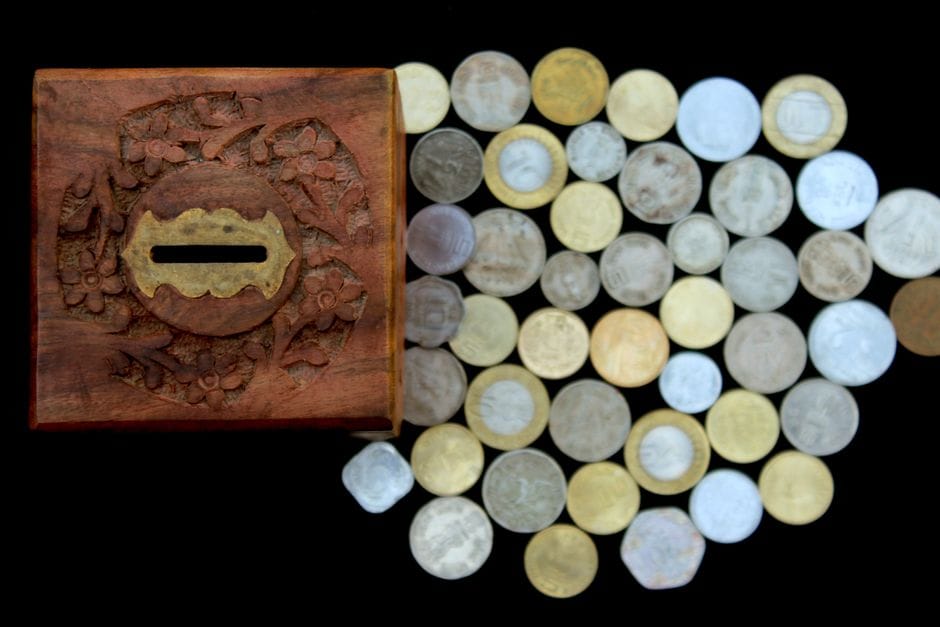
Buried treasure laws in the United States almost never work the way the phrase “finders keepers” suggests. If you dig something valuable out of the ground, the first question is not what you found — it is whose land you were standing on. In most states today, courts fold buried valuables into the general law of found property, and that framework usually favors the landowner over the finder.
- What Buried Treasure Laws Actually Cover
- Who Owns It? The Four Questions Buried Treasure Laws Ask
- Federal Land: Where Buried Treasure Laws Turn Criminal
- What the IRS Says About a Find
- What to Do the Day You Dig Something Up
- What Most People Get Wrong About Buried Treasure Laws
- Frequently Asked Questions
The short answer: if you found it on your own land, you likely have the strongest claim. If you found it on someone else’s private land, the landowner generally has the better claim, and digging without permission can expose you to trespass or theft charges. If you found it on federal or state land, you probably cannot keep it at all, and removing certain items is a federal crime.
Then there is the part nobody expects. Under Treasury Regulation 1.61-14, treasure trove is gross income for the tax year in which it is “reduced to undisputed possession” — meaning the IRS treats a windfall you dug up as taxable income at fair market value, not as a tax-free gift from the universe. The rest of this guide walks through how buried treasure laws sort out ownership, what federal statutes prohibit, what you owe, and what to do on the day it actually happens.
What Buried Treasure Laws Actually Cover
Courts don’t use one rule for everything you might unearth. They sort finds into categories, and the category drives the outcome. Buried treasure laws generally distinguish lost property (the owner accidentally parted with it), mislaid property (the owner set it down deliberately and forgot), abandoned property (the owner gave up all claim), and treasure trove (money, gold, or valuables hidden long ago by an owner who is unknown).
The classic treasure trove rule awarded the find to the finder. That rule has been shrinking. Legal commentary on the modern trend describes states increasingly folding treasure trove into the general found-property framework, which almost always favors the landowner. A few states have gone further and said so directly — Tennessee and Idaho courts have placed treasure trove with the landowner rather than reward someone who dug on land that wasn’t theirs.
There is also the “embedded property” doctrine. Property buried in or embedded in the soil is typically treated as being in the constructive possession of the landowner — the person who owns the dirt is treated as already possessing what’s inside it, even if they never knew it was there.
Who Owns It? The Four Questions Buried Treasure Laws Ask
Before anyone asks what the object is worth, the analysis runs through where you were, whose land it is, what kind of object it is, and whether you had permission. Here is how those factors usually line up.
| Where you found it | Who typically has the claim | What else applies |
|---|---|---|
| Your own private land | You, in most cases | Still taxable income; state reporting rules may apply |
| Someone else’s private land, with permission | Depends on your agreement; landowner has the default claim | Get the split in writing before you dig |
| Someone else’s private land, no permission | Landowner; you may face trespass exposure | Trespassers are disfavored by courts |
| National park land | The federal government | Metal detecting is prohibited in national parks under 36 CFR 2.1 |
| Other federal land (BLM, national forest) | Federal government for protected resources | Rules vary by unit — check with the local office |
| State or municipal park | The government entity | Varies by state and by park; check the agency directly |
| Submerged land / shipwreck | State or federal government for most abandoned wrecks | Abandoned Shipwreck Act of 1987 |
Notice how much of that table says “varies.” That is honest, not evasive. Found-property statutes are written state by state, and the dollar thresholds, holding periods, and notice requirements differ. Your state attorney general’s office, your state historic preservation office, or a local attorney can tell you which version applies where you live.
Federal Land: Where Buried Treasure Laws Turn Criminal
On federal and tribal land, this stops being a property dispute and becomes a criminal-law question. The Archaeological Resources Protection Act of 1979, per the National Park Service, makes it illegal to excavate, remove, damage, or deface any archaeological resource on public or Indian lands without a permit — defining archaeological resources as material remains of human life at least 100 years old and of archaeological interest.
The penalties are real. NPS materials describe ARPA violations as a misdemeanor when the value involved is under $500, and a felony above that threshold, with escalating fines and prison exposure for repeat offenses. Equipment used in the violation — including metal detectors and vehicles — can be forfeited. The older Antiquities Act of 1906, codified at 16 U.S.C. 433, carries a fine of up to $500, up to ninety days imprisonment, or both.
Two more federal statutes matter. The Native American Graves Protection and Repatriation Act of 1990 establishes criminal penalties for knowingly selling or trafficking in Native American human remains or cultural items obtained in violation of the act. And under the Abandoned Shipwreck Act of 1987, the federal government asserted title to most abandoned shipwrecks in state waters and transferred that title to the states.
Recreational coin and jewelry hunting is treated differently on some federal land. ARPA exempts coins collected for personal use when they are not in an archaeological context, which is why some BLM and national forest areas permit hobby detecting while artifact digging stays prohibited. National parks are not among them — detecting is banned parkwide.
What the IRS Says About a Find
Federal tax treatment of a windfall is one of the few genuinely settled pieces of this topic. Treasury Regulation 1.61-14 states that treasure trove, to the extent of its value in U.S. currency, is gross income for the tax year in which it is reduced to undisputed possession.
The leading case is Cesarini v. United States, decided in 1969 in the Northern District of Ohio. A couple bought a used piano for $15 in 1957, found $4,467 inside it in 1964, and reported it as income. The court held the assessment of $836.51 in tax was proper — the money was taxable in the year it was found.
Two practical wrinkles follow. Value is measured at fair market value, not face value. The 2013 Saddle Ridge Hoard — 1,427 gold coins found on a California property — had a face value of $27,980 but was assessed at roughly $10 million. And courts have noted that when possession becomes “undisputed” is generally decided by state law, so a contested claim can affect timing. A tax professional should handle the actual filing.
📨 Get Free Sweepstakes Alerts
Free · No spam · Unsubscribe anytime
What to Do the Day You Dig Something Up
- Stop digging. If you have hit human remains, an old structure, or anything that looks archaeological, stop immediately and contact local law enforcement or the land-managing agency.
- Document everything. Photograph the object in place, note the GPS location and date, and keep the record. Provenance affects both ownership and value.
- Confirm whose land it is. County parcel records will tell you. Do not assume unfenced land is public.
- Report it if your state requires it. Many states have lost-property statutes requiring you to turn found property over to police above a dollar threshold. California’s Civil Code 2080 series, for example, requires turning over property valued at $100 or more, with a 90-day owner-claim window. Other states set different numbers — check yours.
- Get an independent appraisal before selling anything.
- Talk to a lawyer and a tax professional before the object changes hands.
What Most People Get Wrong About Buried Treasure Laws
“Finders keepers is the law.” It is a playground rule, not a legal standard. The modern trend under buried treasure laws runs the other direction, toward the landowner.
“It was abandoned, so it’s free.” Abandonment is a legal conclusion requiring evidence the owner intentionally gave up all claim. Something merely old and forgotten is not automatically abandoned.
“Public land means it belongs to the public.” Public land means the government owns it, and specific statutes govern what can be removed. Those are not the same thing.
“There’s no tax until I sell it.” Under the treasure trove regulation, income is recognized when you take undisputed possession — not when you find a buyer.
“Verbal permission is enough.” If you detect on a friend’s property and hit something significant, a handshake is a weak foundation. Buried treasure laws leave plenty of room for a landowner to claim the whole find.
Frequently Asked Questions
Can I keep something I find buried in my own backyard?
Usually you have the strongest claim, since embedded property is generally treated as in the landowner’s constructive possession. But your state’s lost-property statute may still require reporting, and federal tax rules still treat the value as income. Check your state’s found-property law.
Is metal detecting legal in the United States?
It depends entirely on the land. Detecting is prohibited in national parks under 36 CFR 2.1. Some BLM and national forest areas allow recreational coin and jewelry hunting but not artifact digging, and rules vary by unit. Call the local land office before you go.
What happens if I find human remains?
Stop all activity and contact local law enforcement immediately. If the remains are on federal or tribal land, NAGPRA and ARPA both apply, and NAGPRA carries criminal penalties for trafficking in Native American remains and cultural items. This is not a situation to handle yourself.
Do I have to report a find to the IRS if nobody knows about it?
Treasury Regulation 1.61-14 makes treasure trove gross income in the year it is reduced to undisputed possession, and that obligation does not depend on anyone else knowing. How it applies to your specific find is a question for a qualified tax professional.
Want to put this knowledge to work?
Know the Rules Where You Live
Sweepstakes and prize rules change from state to state — what a sponsor can offer, how prizes are handled, and what protections you have. Pick your state to see the exact rules that apply where you live.
See Sweepstakes Laws in All 50 States →
Sources & How to Verify
The facts on this page are drawn from official government and primary sources. Rules and figures change, so always confirm the current details with the official agency or the promotion’s own published rules.
- FTC Consumer Advice: consumer.ftc.gov — prize, sweepstakes, and lottery scam guidance
- IRS: irs.gov — how prizes and winnings are treated as income
- Social Security Administration: ssa.gov — what SSI recipients must report
- The promotion’s official rules: every legitimate sweepstakes publishes them — the rules page is always the final word
Content last reviewed August 2026. If you notice outdated information, please contact us.
You May Also Like
Related Guides
- Sweepstakes Laws by State (50-State Guide)
- More in This Category
- Sweepstakes Resources
- Scam Checks
- Sweepstakes Tax Calculator
- All Active Sweepstakes
Informational only — not legal, tax, or financial advice. Win Big Daily is an independent educational resource. Prize rules, tax treatment, and benefit-program requirements vary by state and program and change over time, so always verify the current details with the official agency, the promotion’s published rules, or a qualified professional before acting. If a topic involves government benefits, contact the program office about your specific situation.