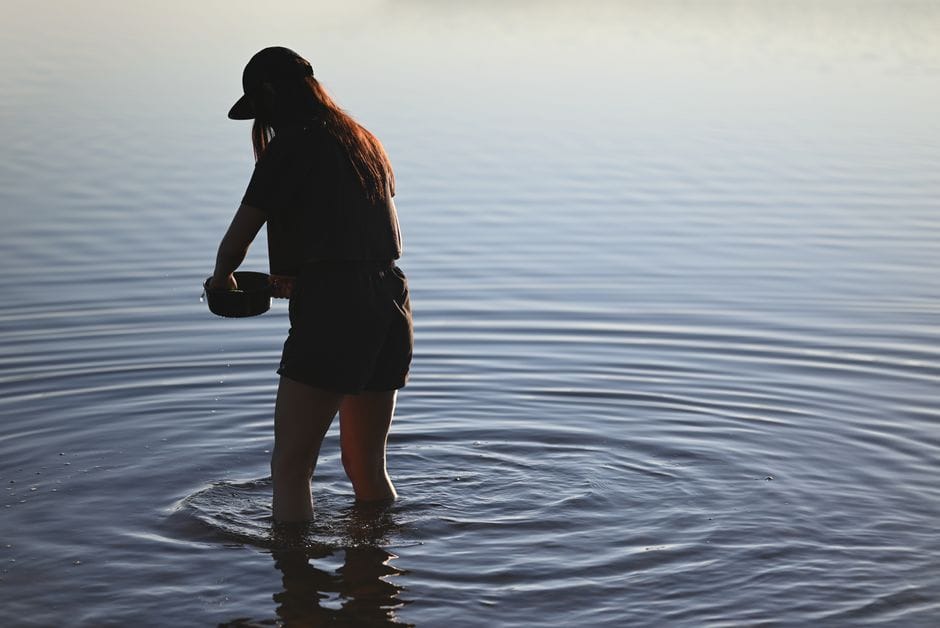
Gold panning is legal in a great many places across the United States — most unclaimed federal land managed by the Bureau of Land Management or the Forest Service, designated recreational mining areas in states like Alaska, and a handful of parks and private pay-to-dig sites — but it is flatly prohibited in most units of the National Park System, and it is never legal on someone else’s active mining claim or private property without permission.
- Where Gold Panning Is Legal on Federal Land
- Gold Panning in National Parks Is Usually Off-Limits
- A Quick Comparison of Where You Can Pan
- What You Actually Get to Keep
- Taxes on Gold You Find or Sell
- State Rules Vary — Here Is How to Check
- What Most People Get Wrong About Gold Panning
- Frequently Asked Questions
The short version: if you are using a pan, a shovel or trowel, and maybe a small hand-fed sluice on open public land, you are almost certainly doing something the government calls “casual use,” and no permit is required. The rules get stricter fast once you add a motor, dig a real hole, or step onto land with a special designation.
And yes — what you find is generally yours to keep. Under the General Mining Law of 1872, gold is a locatable mineral, and a recreational panner taking a reasonable amount from open public land keeps the flakes. The tax side is where most people are surprised, and we will get to that below.
Where Gold Panning Is Legal on Federal Land
The Bureau of Land Management defines “casual use” at 43 CFR 3809.5 as activities “ordinarily resulting in no or negligible disturbance of the public lands or resources.” The regulation specifically names hand panning, non-motorized sluicing, collecting specimens with hand tools, metal detectors, and hand or battery-operated drywashers. Casual use requires no notice and no permit.
The same regulation says casual use does not include mechanized earth-moving equipment, truck-mounted drills, chemicals, or explosives. Cross that line and you owe BLM a notice or a full plan of operations.
On National Forest land, the Forest Service’s rules at 36 CFR 228 Subpart A work similarly. Panning is listed among the activities that do not require a notice of intent, as long as it will not cause significant surface resource disturbance and does not remove more than a reasonable amount of mineral. Some forests add local rules for environmentally sensitive areas, so call the district ranger.
Gold Panning in National Parks Is Usually Off-Limits
This is the trap that catches well-meaning beginners. Under 36 CFR 2.1, collecting rocks, minerals, and paleontological specimens — including gold panning — is generally prohibited in all units of the National Park System, and the National Park Service notes that violations carry criminal penalties.
There are narrow exceptions. The Whiskeytown unit of Whiskeytown-Shasta-Trinity National Recreation Area in California allows recreational panning under 36 CFR 7.91. The Park Service sells a gold panning permit for $1, valid one year, required for anyone 17 or older, plus a park entrance pass. Some Alaska park units also allow hand-pan surface collection for personal recreational use.
Whiskeytown’s regulation is a good example of how specific these carve-outs get: it defines panning as using a metal or plastic pan plus a digging tool with a blade no larger than 4 inches wide and 8 inches long. Sluice boxes, dredges, crevice cleaners, snorkels, and mercury are all prohibited there.
A Quick Comparison of Where You Can Pan
| Land type | Gold panning allowed? | Permit needed? |
| BLM land, open and unclaimed | Yes, as casual use | No permit for hand tools (43 CFR 3809.5) |
| National Forest, open and unclaimed | Yes, if disturbance is not significant | Usually no notice of intent (36 CFR 228) |
| National Park units | Generally prohibited | Rare exceptions only (36 CFR 2.1) |
| Whiskeytown NRA | Yes, pan and small trowel only | $1 annual permit, age 17+ |
| Designated Wilderness | Generally closed to mineral collecting | N/A |
| Active mining claim | No, without claimant’s permission | N/A |
| State recreational mining areas | Often yes | Varies by state — check the state agency |
What You Actually Get to Keep
On open federal land, the gold you pan is yours. That flows from the General Mining Law of 1872, which makes gold a locatable mineral available to U.S. citizens on public land open to mineral entry. Casual-use panning is treated as taking a reasonable amount for personal recreation — you are not buying it, leasing it, or paying a royalty.
If you want exclusive rights to a spot, that is a mining claim, and claims cost money. BLM raised its fees effective for claims located on or after September 1, 2024: a $49 location fee, a $200 annual maintenance fee per claim or site, and a $25 processing fee. Maintenance fees are due each year in early September.
Two limits worth remembering. Wilderness areas are generally closed to mineral collecting, even surface material. And BLM’s casual-use guidance expects you to backfill any hand digging and pack out every bit of trash before you leave.
Taxes on Gold You Find or Sell
Nobody sends you a tax form for a vial of flakes, but the rules exist. Treasury Regulation 26 CFR 1.61-14 says treasure trove is gross income “to the extent of its value in United States currency, for the taxable year in which it is reduced to undisputed possession” — the principle upheld in Cesarini v. United States in 1969.
If you later sell physical gold you have held more than a year, the IRS treats it as a collectible. Per IRS Topic no. 409, net capital gains from collectibles are taxed at a maximum 28% rate, not the 15% or 20% that applies to most stock gains. Held a year or less, gains are ordinary income at your regular rate.
📨 Get Free Sweepstakes Alerts
Free · No spam · Unsubscribe anytime
How this applies to a hobby panner versus someone running a small operation depends on facts the IRS weighs case by case. Talk to a tax professional or read the guidance at IRS.gov before you assume anything about your own return.
State Rules Vary — Here Is How to Check
State law can be stricter than federal law, and it changes. California, for example, has prohibited suction dredging under Fish and Game Code section 5653.1 since 2009, and the Department of Fish and Wildlife does not issue dredge permits — while hand panning remains widely available on open federal land in the state.
Alaska runs the friendliest system. The Department of Natural Resources treats recreational panning as a generally allowed use on much state land and has designated recreational mining areas — Petersville, Hatcher Pass, Nome Creek, Pedro Dome — with equipment rules posted for each site.
We are not going to invent a figure for your state, because these programs differ enormously. Check three things: the BLM or Forest Service office for the specific district, your state’s natural resources or mining agency, and the state fish and wildlife agency for in-stream work rules.
What Most People Get Wrong About Gold Panning
- “Public land means anyone can dig anywhere.” Much of it is already covered by active mining claims. Check BLM’s claim records before you pick a creek.
- “A national park is public land, so panning is fine.” The opposite is true — 36 CFR 2.1 makes parks the most restricted category.
- “A little motor is still casual use.” Mechanized earth-moving equipment is explicitly excluded from BLM’s casual-use definition.
- “Found gold has nothing to do with taxes.” Treasury regulations say otherwise, and selling triggers the collectibles rate.
- “Reclamation is optional for small holes.” Backfilling hand digging is expected, not a courtesy.
Frequently Asked Questions
Do I need a permit for gold panning on BLM land?
Generally no. Hand panning and non-motorized sluicing fall under casual use in 43 CFR 3809.5, which requires no notice or permit — provided the land is open, unclaimed, and you leave no meaningful disturbance.
Can I keep the gold I find?
On open, unclaimed federal land, yes. Gold is a locatable mineral under the General Mining Law of 1872, and a reasonable recreational amount taken by hand is yours. On private land or an active claim, you need the owner’s or claimant’s permission.
How do I know if a creek is already claimed?
Contact the BLM state office or field office covering that ground and ask them to check the mining claim records, and confirm with the Forest Service district ranger if it is national forest. Claim boundaries are often marked with posts, but not always.
Is gold panning taxable?
The Treasury regulation on treasure trove treats found value as gross income in the year you take undisputed possession, and IRS Topic no. 409 caps long-term collectibles gains at 28%. How that applies to your situation depends on your facts — check IRS.gov or a tax professional.
Want to put this knowledge to work?
Know the Rules Where You Live
Sweepstakes and prize rules change from state to state — what a sponsor can offer, how prizes are handled, and what protections you have. Pick your state to see the exact rules that apply where you live.
See Sweepstakes Laws in All 50 States →
Sources & How to Verify
The facts on this page are drawn from official government and primary sources. Rules and figures change, so always confirm the current details with the official agency or the promotion’s own published rules.
- FTC Consumer Advice: consumer.ftc.gov — prize, sweepstakes, and lottery scam guidance
- IRS: irs.gov — how prizes and winnings are treated as income
- Social Security Administration: ssa.gov — what SSI recipients must report
- The promotion’s official rules: every legitimate sweepstakes publishes them — the rules page is always the final word
Content last reviewed August 2026. If you notice outdated information, please contact us.
You May Also Like
Related Guides
- Sweepstakes Laws by State (50-State Guide)
- More in This Category
- Sweepstakes Resources
- Scam Checks
- Sweepstakes Tax Calculator
- All Active Sweepstakes
Informational only — not legal, tax, or financial advice. Win Big Daily is an independent educational resource. Prize rules, tax treatment, and benefit-program requirements vary by state and program and change over time, so always verify the current details with the official agency, the promotion’s published rules, or a qualified professional before acting. If a topic involves government benefits, contact the program office about your specific situation.