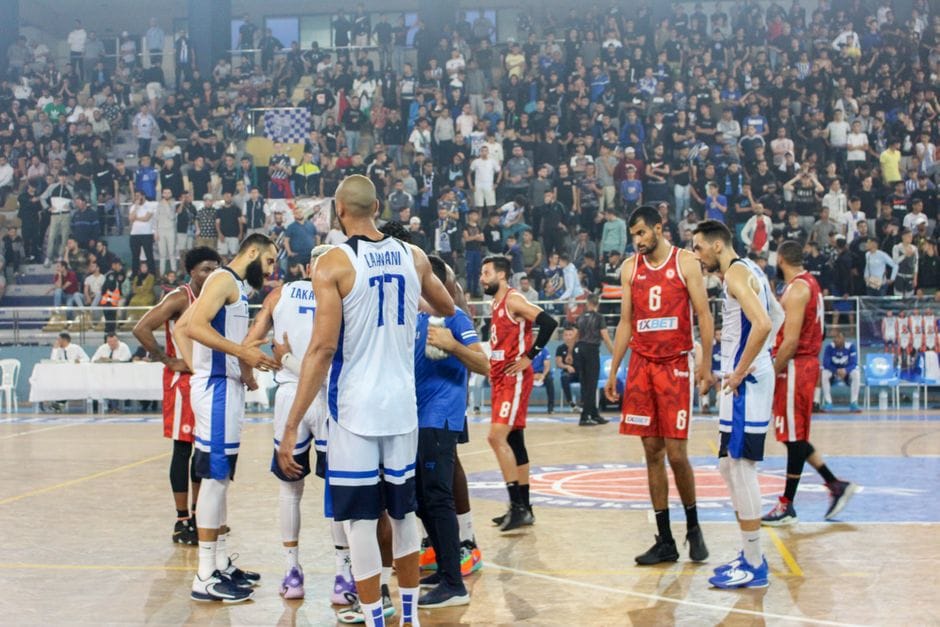
The buffett bracket challenge is the most famous prize in American contest history that nobody ever won — a $1 billion payout offered in 2014 for a perfect NCAA men’s basketball bracket, and it was gone before the first weekend ended. Not one qualifying entry survived past game 25 of the tournament. The billion dollars stayed exactly where it started.
- How the buffett bracket challenge started
- Why the odds made this prize unwinnable
- The 2014 tournament ended it in two days
- The lawsuit the buffett bracket challenge left behind
- What replaced it: nine years of nobody winning
- 2025: the buffett bracket challenge finally paid out
- Context: how close anyone has actually gotten
- What winners can learn from this
- Frequently Asked Questions
What most people don’t know is what happened next. The billion-dollar version never ran again. It was replaced by a much smaller, employees-only contest that quietly went unclaimed for nine straight years, until 2025, when an anonymous worker at a Berkshire Hathaway subsidiary finally walked away with $1 million — after Warren Buffett changed the rules to make winning possible.
Along the way, the buffett bracket challenge produced a federal appeals court ruling, a $5.5 million judgment against Yahoo, and one Illinois man who had the last perfect bracket in the country and hadn’t entered the contest at all. Here is the documented story, start to finish.
How the buffett bracket challenge started
In January 2014, Quicken Loans announced it had partnered with Warren Buffett and Berkshire Hathaway to offer $1 billion to anyone who filled out a perfect men’s NCAA tournament bracket. According to the company’s own press release, entrants had to be at least 21, U.S. citizens, and among the first 10 million people to register.
The prize structure was spelled out in that announcement. A winner could take $1 billion paid as 40 annual installments of $25 million, or elect an immediate lump sum of $500 million. If more than one person went perfect, they would share it.
Quicken Loans also built in a consolation layer: 20 first prizes of $100,000 each, awarded to the 20 most accurate imperfect brackets. That part mattered, because the perfect bracket was never realistically in play.
Why the odds made this prize unwinnable
A 64-team bracket requires 63 correct picks. If every game were a coin flip, the odds of getting all of them right are 1 in 9,223,372,036,854,775,808 — roughly 9.2 quintillion, a figure the NCAA itself has published.
Real brackets aren’t coin flips, of course. DePaul University mathematician Jay Bergen has estimated that a knowledgeable fan who accounts for seeding and historical trends improves the odds to somewhere around 1 in 128 billion. That is still not a number any person should plan around.
Put plainly: Buffett and Quicken Loans offered a real billion dollars, and the math meant they were almost certainly never going to pay it. That is not a criticism of the contest — the terms were published up front, and the consolation prizes were real money that did get awarded.
The 2014 tournament ended it in two days
The tournament did not wait long. Mercer’s upset of Duke on the first Friday wiped out most of the remaining perfect entries. As reported by the Associated Press and multiple outlets covering the contest, Memphis’ 71-66 win over George Washington that same evening eliminated the final three brackets still alive for the billion.
It took 25 games. Not a single billion-dollar entry made it out of the round of 64 clean.
There’s a footnote that has stuck with the story ever since. Brad Binder, then 23, of Buffalo Grove, Illinois, held what was believed to be the last perfect bracket in the country that year — it survived until Dayton’s 55-53 upset of Syracuse. Binder had not entered the Quicken Loans contest, so he was never eligible for the prize.
The lawsuit the buffett bracket challenge left behind
The contest also ended up in federal court, though not over the prize. Before the Buffett deal came together, Yahoo had contracted with Dallas-based sweepstakes firm SCA Promotions to run its own $1 billion bracket competition. When Buffett and Quicken Loans founder Dan Gilbert teamed up, Yahoo hosted their version instead and dropped SCA.
SCA sued. As reported by Reuters and Fortune, SCA argued its contract entitled it to half of its $11 million fee as a cancellation penalty. The 5th U.S. Circuit Court of Appeals in New Orleans agreed, and Yahoo was ordered to pay SCA $5.5 million.
Nobody in that dispute did anything improper — it was a contract fight between two companies, resolved through the courts. But it is part of why the billion-dollar buffett bracket challenge was a one-year event. It never returned in that form.
What replaced it: nine years of nobody winning
Starting in 2016, Buffett moved the contest in-house. Only Berkshire Hathaway employees could enter. As ESPN and Forbes reported at the time, the offer was $1 million a year for life to any employee who correctly picked every game through the Sweet 16, with $100,000 going to the employee with the best bracket short of that.
In that first year, according to the Omaha World-Herald, eight employees split the $100,000 and nobody came close to a perfect Sweet 16.
So Buffett kept loosening it. By 2024, per CNBC’s reporting, employees were allowed to waive the results of the eight games involving No. 1 and No. 2 seeds. Still no winner. For nine consecutive years, the top prize in the buffett bracket challenge went unclaimed.
2025: the buffett bracket challenge finally paid out
In March 2025, Buffett changed the rules again. As reported by CNBC, employees only needed to correctly pick 30 of the 32 first-round games to qualify for $1 million. Buffett was direct about why. “I’m getting older,” he said in the announcement. “I want to give away a million dollars to somebody while I’m still around as chairman.”
It worked. Twelve employees hit 31 of 32. The tiebreaker went to whoever had the longest opening streak, and the winner had called the first 29 games in a row correctly before missing.
📨 Get Free Sweepstakes Alerts
Free · No spam · Unsubscribe anytime
What happened after the win: the winner is an employee of FlightSafety International, a Berkshire Hathaway subsidiary, and asked to remain anonymous. Buffett has said publicly that he does not know the winner’s name. The 11 runners-up each received $100,000. Buffett’s comment on the result, per CNBC: “We hit the sweet spot this year.”
Context: how close anyone has actually gotten
The record for a verified perfect bracket belongs to Gregg Nigl, a neuropsychologist from Columbus, Ohio. In 2019, per NCAA.com, he correctly picked the first 49 games of the men’s tournament in the Capital One NCAA March Madness Bracket Challenge — the first verified bracket ever to survive into the Sweet 16.
His run ended in game 50, when No. 3 seed Purdue beat No. 2 seed Tennessee in overtime. His bracket ultimately finished 348th in that game, as the Washington Post reported.
Forty-nine is the high-water mark. A perfect 63 has never been publicly verified.
What winners can learn from this
A few things are simply factual here. Grand prizes with astronomical odds and real secondary prizes are different animals — in 2014, the billion was never paid, but twenty $100,000 consolation prizes were structured into the published rules. The rules document is where the actual, winnable money usually lives.
Contest terms can and do change between years. The buffett bracket challenge went from a perfect Sweet 16, to waived top-seed games, to 30 of 32 — and the year the threshold moved is the year someone won.
Prize payout structure is set by the sponsor’s rules, not by the winner. The 2014 buffett bracket challenge specified 40 annual installments or a $500 million lump sum. In 2025, the payout was $1 million, with $100,000 to each of eleven runners-up.
Prize money is generally reportable income in the U.S., and the IRS publishes guidance on gambling and contest winnings at irs.gov. If a win could affect benefits like SSI, SNAP, or Medicaid, reporting requirements generally apply, and outcomes depend on the specific program and your own circumstances — the administering agency is the only place to get an answer for your situation.
And finally: winners can stay private. The 2025 buffett bracket challenge winner did, and the sponsor honored it.
Frequently Asked Questions
Did anyone ever win the $1 billion buffett bracket challenge?
No. The 2014 contest ran once and produced no perfect bracket. All qualifying entries were eliminated within the first 25 games of the tournament. Twenty consolation prizes of $100,000 were awarded to the most accurate imperfect brackets.
Who won the buffett bracket challenge in 2025?
An anonymous employee of FlightSafety International, a Berkshire Hathaway subsidiary. They picked 31 of 32 first-round games correctly and won the tiebreaker with a 29-game opening streak. Buffett has said he doesn’t know the winner’s name.
Can the public enter the buffett bracket challenge?
Not the current version. Since 2016 the contest has been open only to Berkshire Hathaway employees. The 2014 billion-dollar version was open to the public but has not been repeated.
What are the odds of a perfect NCAA bracket?
The NCAA cites 1 in 9.2 quintillion if every game is treated as a coin flip. DePaul mathematician Jay Bergen has estimated roughly 1 in 128 billion for an informed picker. The verified record is 49 straight correct games, set by Gregg Nigl in 2019.
Want to put this knowledge to work?
Know the Rules Where You Live
Sweepstakes and prize rules change from state to state — what a sponsor can offer, how prizes are handled, and what protections you have. Pick your state to see the exact rules that apply where you live.
See Sweepstakes Laws in All 50 States →
Sources & How to Verify
The facts on this page are drawn from official government and primary sources. Rules and figures change, so always confirm the current details with the official agency or the promotion’s own published rules.
- FTC Consumer Advice: consumer.ftc.gov — prize, sweepstakes, and lottery scam guidance
- IRS: irs.gov — how prizes and winnings are treated as income
- Social Security Administration: ssa.gov — what SSI recipients must report
- The promotion’s official rules: every legitimate sweepstakes publishes them — the rules page is always the final word
Content last reviewed August 2026. If you notice outdated information, please contact us.
You May Also Like
Related Guides
- Sweepstakes Laws by State (50-State Guide)
- More in This Category
- Sweepstakes Resources
- Scam Checks
- Sweepstakes Tax Calculator
- All Active Sweepstakes
Informational only — not legal, tax, or financial advice. Win Big Daily is an independent educational resource. Prize rules, tax treatment, and benefit-program requirements vary by state and program and change over time, so always verify the current details with the official agency, the promotion’s published rules, or a qualified professional before acting. If a topic involves government benefits, contact the program office about your specific situation.