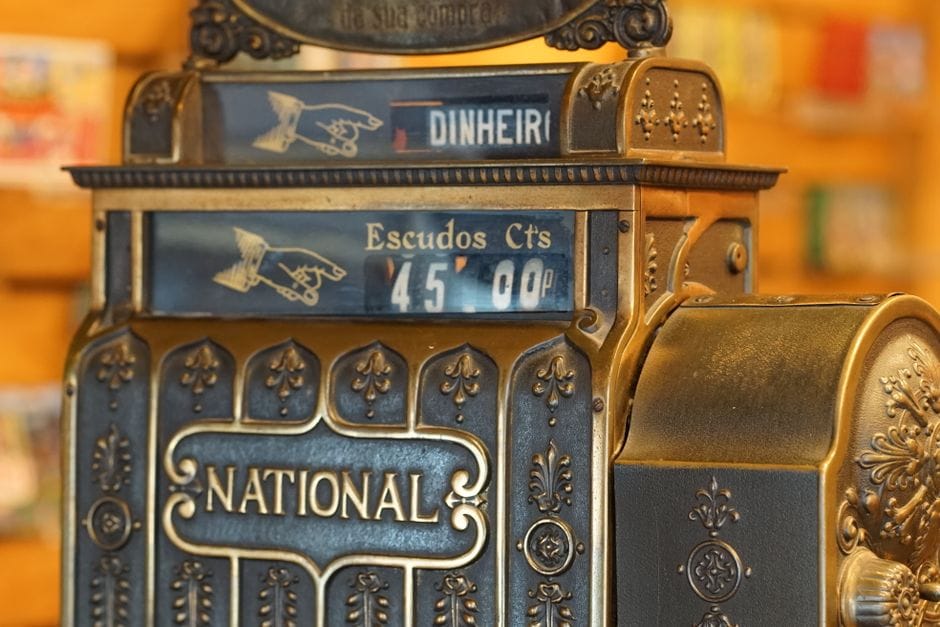
If you’ve been given too much change at a register, the short answer is this: the money isn’t yours, and the store is generally entitled to get it back. Under the theft provisions most states have adopted, keeping property you know was handed to you by mistake — and making no reasonable effort to return it — can itself be treated as theft, even though you never took anything off a shelf.
- What Actually Happens When You’re Given Too Much Change
- Why the Law Says Mistaken Money Isn’t a Gift
- How State Rules Differ When You’re Given Too Much Change
- Being Given Too Much Change at a Bank or ATM
- Does the Cashier Pay for It?
- What Most People Get Wrong About Being Given Too Much Change
- A Sensible Way to Handle It
- Frequently Asked Questions
In practice, almost nobody gets arrested over four dollars. The realistic outcomes are far more ordinary: you hand it back and the cashier thanks you, or you notice in the parking lot and walk it in, or you drive off, and the store absorbs a small register shortage that shows up in a nightly count. But the legal principle doesn’t change with the dollar amount. It only changes how likely anyone is to chase it.
This guide walks through what actually happens when you’re given too much change — at a store, at a bank, at a drive-through window — what the law says in plain English, what the cashier faces on their end, and how to handle it without turning a small moment into a problem. Where rules vary by state, we say so rather than inventing a number.
What Actually Happens When You’re Given Too Much Change
Most overpayments come from one of three places: the cashier misreads a bill, punches the wrong “cash tendered” amount, or grabs a twenty from the wrong slot in the drawer. Modern point-of-sale systems calculate change automatically, so the error is usually in what the human hands over, not what the screen says.
At the end of a shift, the drawer gets counted against what the system says should be there. A shortage shows up immediately. Small ones are often written off; repeated or large ones can trigger a review, a look at register video, or a conversation with a manager.
If you catch the error at the counter, returning it takes ten seconds. If you catch it later, calling the store and describing the time and lane is usually enough for them to match it to a specific drawer. Many stores will simply thank you and note the correction.
Why the Law Says Mistaken Money Isn’t a Gift
Two separate bodies of law sit behind this. The first is civil: the doctrine of unjust enrichment, which generally lets a party who pays money by mistake sue to recover it. The idea is straightforward — you received a benefit you weren’t entitled to, at someone else’s expense, and keeping it would be unfair.
The second is criminal. Model Penal Code § 223.5, the template many state codes follow, provides that a person who comes into control of property they know was “delivered under a mistake as to the nature or amount of the property” commits theft if, intending to deprive the owner, they fail to take reasonable measures to restore it.
Both hinge on knowledge. If you genuinely didn’t notice you were given too much change, you didn’t form the intent the criminal statute requires. If you counted it in the parking lot, realized the error, and decided to keep it, you’re in different territory.
How State Rules Differ When You’re Given Too Much Change
This is where a guide has to be honest: the specific statute, the charge name, and the dollar thresholds all vary by state. Some states codify mistaken delivery directly. Arkansas Code § 5-36-105 is titled “Theft of property lost, mislaid, or delivered by mistake.” Maine’s Title 17-A § 356-A covers “Theft of lost, mislaid or mistakenly delivered property.”
Other states fold it into a general lost-property or larceny statute. California Penal Code § 485 covers appropriating found property without making reasonable efforts to locate the owner, and California’s felony threshold for grand theft sits at $950 — a figure specific to California, not a national rule.
To check your own state, search your state legislature’s official site for “theft” plus “mistake” or “lost property,” or look up your state attorney general’s consumer pages. Don’t assume another state’s dollar figure applies where you live.
| Situation | Who can ask for it back | Typical real-world outcome |
| Cashier hands you an extra $5 | The store, civilly | Register shortage; rarely pursued |
| Cashier hands you an extra $100 and you’re recorded | The store; police in some cases | Store may call you using loyalty or card data |
| Bank teller overpays a withdrawal | The bank, with account records | Bank contacts you; correction posted |
| ATM dispenses extra cash | The bank; the machine is audited | Discrepancy found in the ATM balance |
| Direct deposit or refund error | Payer or agency, per its own rules | Reversal or repayment request |
Being Given Too Much Change at a Bank or ATM
Banks are a different animal because everything is documented. Teller drawers are balanced, ATMs are audited against dispensed totals, and your account number is attached to the transaction. An error that a convenience store would shrug off is one a bank can trace to you by name within a day.
If the mistake runs the other way — the bank shorts you, or a wrong amount posts to your account — federal rules give you a path. Under Regulation E (12 CFR § 1005.11), a financial institution must generally investigate within 10 business days of a notice of error, may extend to 45 days if it provisionally credits your account, and must correct a confirmed error within one business day. Notice is generally required within 60 days of the statement showing the error.
Corporate cases show how seriously courts treat mistaken payments. In September 2022, the Second Circuit ruled that lenders who received roughly $500 million Citibank wired to them by mistake in the Revlon loan matter had to return it, finding they were on inquiry notice that the payment was an error.
Does the Cashier Pay for It?
Often people hesitate to return money because they assume it’s already been docked from someone’s paycheck. Sometimes a store does try that. Federal law limits how far it can go.
📨 Get Free Sweepstakes Alerts
Free · No spam · Unsubscribe anytime
According to the Department of Labor’s Fact Sheet #16, deductions for cash or merchandise shortages are not lawful to the extent they reduce an employee’s wages below the federal minimum wage — $7.25 per hour, unchanged since July 24, 2009 — or cut into overtime pay owed. For tipped employees where the employer claims a tip credit, DOL guidance is stricter still: the employer may not deduct for cash register shortages at all, because the worker is already treated as earning only the minimum wage.
Many states go further than federal law and restrict shortage deductions outright. That varies by state; your state labor department is the place to confirm what applies where you work.
What Most People Get Wrong About Being Given Too Much Change
The biggest misconception is “possession is nine-tenths of the law.” It isn’t a legal rule, and it has never meant that mistaken payments become yours. Courts routinely order mistaken money returned regardless of who is holding it.
The second is the belief that a store’s decision not to press the issue means you were entitled to the money. Declining to pursue a small loss is a business judgment, not a legal blessing.
The third is assuming small amounts are legally different from large ones. Amount affects the charge level and whether anyone bothers — not whether the money was ever yours. And the fourth: assuming you must have made the error if the store calls. Ask what the drawer count showed and which transaction it matched.
A Sensible Way to Handle It
- Count your change before you leave the counter. Most errors die here.
- If you spot it later, call the store, give the date, time, lane, and amount, and ask how they’d like it returned.
- Keep the receipt. It’s the fastest way to match the transaction.
- If a bank contacts you about an overpayment, ask for the transaction record in writing before agreeing to anything.
- If you’re on a benefits program and receive an unexpected payment or deposit, reporting requirements generally apply — how it’s treated depends on the program and your situation, so contact that agency directly rather than guessing.
Frequently Asked Questions
Can I be arrested for keeping extra change?
It’s possible but uncommon for small amounts. Statutes modeled on Model Penal Code § 223.5 require that you knew the money was delivered by mistake and intended to deprive the owner. Charges and thresholds vary by state — check your state’s criminal code.
What if I only noticed after I got home?
Noticing late isn’t the problem; the intent standard turns on what you do once you know. Calling the store with the time and amount is the ordinary response, and most stores handle it as a routine correction.
Can a store deduct my extra change from the cashier’s pay?
Only within limits. DOL Fact Sheet #16 says shortage deductions can’t push wages below the $7.25 federal minimum or reduce overtime owed, and tip-credit employees generally can’t be charged for register shortages at all. State rules vary.
Is a bank overpayment treated differently?
Practically, yes — banks have records tying the transaction to you and routinely seek reimbursement. If the error runs against you, Regulation E gives banks 10 business days to investigate, extendable to 45 days with provisional credit, with notice generally due within 60 days.
Want to put this knowledge to work?
Know the Rules Where You Live
Sweepstakes and prize rules change from state to state — what a sponsor can offer, how prizes are handled, and what protections you have. Pick your state to see the exact rules that apply where you live.
See Sweepstakes Laws in All 50 States →
Sources & How to Verify
The facts on this page are drawn from official government and primary sources. Rules and figures change, so always confirm the current details with the official agency or the promotion’s own published rules.
- FTC Consumer Advice: consumer.ftc.gov — prize, sweepstakes, and lottery scam guidance
- IRS: irs.gov — how prizes and winnings are treated as income
- Social Security Administration: ssa.gov — what SSI recipients must report
- The promotion’s official rules: every legitimate sweepstakes publishes them — the rules page is always the final word
Content last reviewed August 2026. If you notice outdated information, please contact us.
You May Also Like
Related Guides
- Sweepstakes Laws by State (50-State Guide)
- More in This Category
- Sweepstakes Resources
- Scam Checks
- Sweepstakes Tax Calculator
- All Active Sweepstakes
Informational only — not legal, tax, or financial advice. Win Big Daily is an independent educational resource. Prize rules, tax treatment, and benefit-program requirements vary by state and program and change over time, so always verify the current details with the official agency, the promotion’s published rules, or a qualified professional before acting. If a topic involves government benefits, contact the program office about your specific situation.