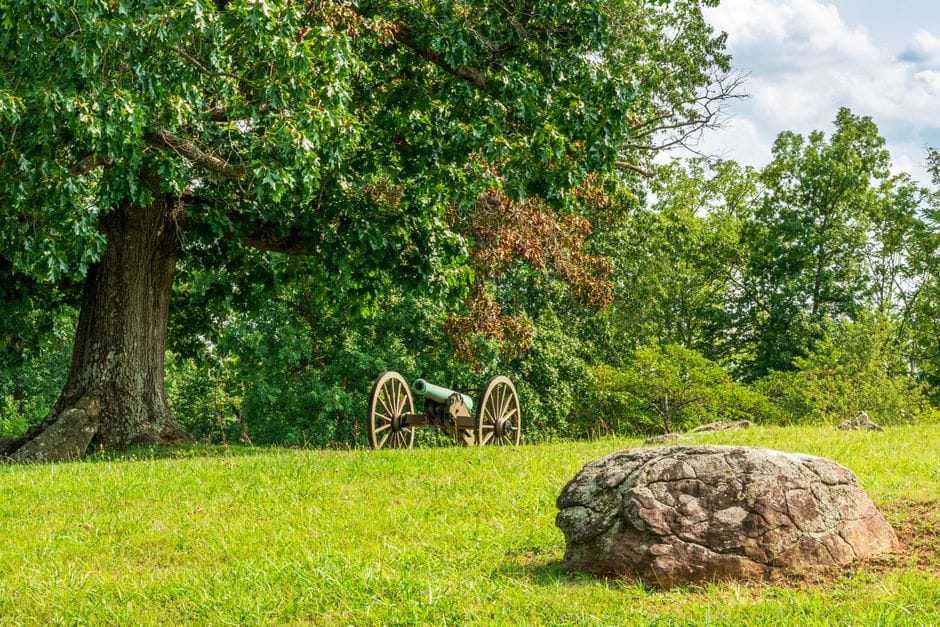
Civil war relic hunting is legal in the United States, but only in a narrow lane: on private land, with the landowner’s written permission, and away from federally protected ground. The moment your shovel touches federal or Indian land, a different body of law applies — and the penalties are criminal, not just a ticket.
- The Federal Laws Behind Civil War Relic Hunting
- Who Owns the Ground: A Comparison
- Private Land: Permission Is the Whole Ballgame
- What Most People Get Wrong About Civil War Relic Hunting
- Graves, Human Remains, and When to Stop
- Live Ordnance Is a Real Hazard, Not a Legend
- How to Check Your State’s Civil War Relic Hunting Rules
- Frequently Asked Questions
Here’s the short answer most diggers need. Almost every famous battlefield you can name is a national park, a national military park, or a national battlefield unit administered by the National Park Service. On those lands, simply carrying a detector is prohibited. Outside of them, whether you can dig depends on who owns the dirt, how old the object is, and what your state says.
This guide walks through the federal statutes in plain English, the difference between a coin and an “archaeological resource,” how state rules diverge, what to do about human remains, and the one hazard that has actually killed relic collectors. Nothing here is legal advice — it’s a map of how the rules work so you can ask the right agency the right question before you go.
The Federal Laws Behind Civil War Relic Hunting
Three federal laws do most of the work. Together they cover roughly a third of the country’s land area, and they are the reason civil war relic hunting on public ground almost always requires a permit that hobbyists cannot get.
The Archaeological Resources Protection Act of 1979 (ARPA) governs excavation and removal of archaeological resources on federal and Indian lands. Under the implementing regulations at 43 CFR 7.3, an “archaeological resource” means material remains of human life or activity that are at least 100 years of age and of archaeological interest. Every Civil War artifact clears that bar by more than a century.
ARPA penalties scale with value. According to the National Park Service, a first ARPA offense can bring a fine of up to $20,000 and up to one year in prison, with a felony charge available when the archaeological or commercial value plus the cost of restoration and repair exceeds $500. Second felony offenses can reach a $100,000 fine and five years. Equipment used in the violation — detectors, shovels, GPS units, vehicles — can be seized and forfeited.
The Antiquities Act of 1906 is the older statute that first made it a crime to remove objects of antiquity from federal land without permission. NPS regulation 36 CFR 2.1 is the one that catches most hobbyists: it prohibits “possessing or using a mineral or metal detector, magnetometer, side scan sonar, other metal detecting device, or subbottom profiler” in park areas. Note the word possessing.
That regulation has narrow exceptions — a detector broken down and packed so it can’t be used in transit, marine electronics used for navigation, and devices used under authorized scientific, mining, or administrative activity. Permits for detector use are issued for research, not recreation.
Who Owns the Ground: A Comparison
Land status, not history, decides the rule. The same musket ball is a felony in one field and a legal find in the next.
| Land type | Detector allowed? | Governing rule |
| National park, battlefield, monument | No — possession itself prohibited | 36 CFR 2.1; Antiquities Act; ARPA |
| National forest | Recreational detecting generally allowed in developed campgrounds, picnic and swim areas; historic artifacts off-limits | Forest Service policy; 36 CFR 261.9; ARPA |
| Other federal or Indian land | Excavation/removal of 100+ year resources requires a permit | ARPA (16 U.S.C. 470ee) |
| Submerged US or foreign military wrecks | No disturbance without Navy permission | Sunken Military Craft Act of 2004 |
| State parks and state historic sites | Varies widely by state — permit, designated areas, or ban | State law and park agency rules |
| Private land | Generally yes, with the owner’s permission | State law; trespass and property law |
The Sunken Military Craft Act deserves a note. The Naval History and Heritage Command states that Navy sunken craft remain US property regardless of location or passage of time, and civil penalties can run up to $100,000 per violation. A Civil War gunboat in a river bottom is not salvage.
Private Land: Permission Is the Whole Ballgame
Most legitimate civil war relic hunting happens on farms, woodlots, and homesteads in private hands. Federal artifact law generally does not reach private property, which is why access is the hobby’s real currency.
Get permission in writing. A signed agreement should name the parcel, the dates, and who keeps what you find. Without it, you are exposed to criminal trespass charges, and ownership of anything recovered is murky at best. Verbal permission from someone who turns out not to be the owner protects you from nothing.
Also confirm the land isn’t subject to a conservation easement, a federal or state historic designation, or a cemetery boundary. Any of those can change the analysis even on privately titled ground.
What Most People Get Wrong About Civil War Relic Hunting
“It was just lying on the surface.” ARPA reaches removal, not only digging. Surface collection of a 100-year-old artifact on federal land is still covered.
“The coin exemption covers my Civil War finds.” ARPA exempts coins collected for personal use when they are not in an archaeological context. A dropped modern quarter in a campground is one thing; a Seated Liberty coin in a camp scatter is context, and the exemption doesn’t rescue it.
“National forest equals open season.” Forest Service guidance permits recreational detecting mainly in developed recreation areas and puts the burden on you to notice when a site looks archaeological, stop, and notify the forest office.
“I only took junk.” Value under ARPA includes the cost of restoration and repair of the disturbed site. Digging a shallow hole in an intact camp can generate a restoration figure that pushes a case past the $500 felony threshold.
📨 Get Free Sweepstakes Alerts
Free · No spam · Unsubscribe anytime
“Nobody enforces this.” Federal agencies run ARPA investigations, and forfeiture of vehicles and gear is a standard part of the outcome.
Graves, Human Remains, and When to Stop
Battlefields and campsites contain burials — soldiers, civilians, and, on many Southern properties, enslaved people. If you uncover bone, buttons in a body-shaped alignment, or coffin hardware, stop immediately, do not disturb further, and contact local law enforcement and your State Historic Preservation Office.
On federal and tribal land, the Native American Graves Protection and Repatriation Act adds its own requirements for human remains and associated funerary objects. Every state also has grave-desecration and unmarked-burial statutes, and those apply on private land too. Penalties and reporting timelines differ by state — check your state’s code rather than assuming.
Live Ordnance Is a Real Hazard, Not a Legend
Civil war relic hunting turns up shells that are still loaded. In February 2008, Virginia collector Sam White was killed when a cannonball he was restoring detonated at his home in Chester, Virginia; news reports at the time noted shrapnel reached a house a quarter-mile away. He had reportedly worked on roughly 1,600 shells before that one.
The National Park Service periodically reports unexploded shells surfacing at units like Richmond National Battlefield Park. The response is always the same: don’t move it, don’t strike it, mark the location, back away, and call 911 so a bomb squad can handle it. Transporting live ordnance can also violate state explosives law.
How to Check Your State’s Civil War Relic Hunting Rules
State rules vary enormously, and no honest guide can give you a single number that applies nationwide. Some states permit detecting in designated state park areas without a permit, some require one, and some prohibit digging on state land entirely. Coastal and historic-site rules are often stricter than general park rules.
Before a hunt, work through four checks:
- Confirm land ownership through the county assessor or GIS parcel map — not a trail app.
- Call the managing agency directly: the state parks department for state land, the district ranger for national forest, the park superintendent for NPS units.
- Contact your State Historic Preservation Office about registered archaeological sites and unmarked-burial law. Every state and territory has one.
- Get landowner permission in writing, with a find-ownership clause.
Ask the agency in writing when you can, and keep the reply. If someone tells you a rule and can’t point you to the statute, regulation, or park compendium behind it, treat it as a rumor.
Frequently Asked Questions
Can I metal detect at a national battlefield park if I don’t dig?
No. Under 36 CFR 2.1, possessing or using a metal detector in a park area is itself prohibited, with limited exceptions such as a device broken down and packed so it cannot be used. Digging is a separate, additional violation.
Do I need a permit for civil war relic hunting on my own property?
Generally no permit is required to detect on land you own, though state burial, cemetery, and historic-site laws still apply, and local ordinances may restrict digging. Check with your county and your State Historic Preservation Office.
What happens if I find something on federal land by accident?
Leave it in place, note the location, and report it to the managing agency. Removing it converts an accidental find into a potential ARPA violation, which the National Park Service describes as carrying fines up to $20,000 and up to a year in prison for a first offense.
Is it legal to sell Civil War relics?
Selling artifacts lawfully recovered from private land is generally permitted, but ARPA also prohibits trafficking in resources taken from federal or Indian land in violation of the statute. Provenance documentation matters, and rules for items involving human remains or tribal objects are stricter.
Want to put this knowledge to work?
Know the Rules Where You Live
Sweepstakes and prize rules change from state to state — what a sponsor can offer, how prizes are handled, and what protections you have. Pick your state to see the exact rules that apply where you live.
See Sweepstakes Laws in All 50 States →
Sources & How to Verify
The facts on this page are drawn from official government and primary sources. Rules and figures change, so always confirm the current details with the official agency or the promotion’s own published rules.
- FTC Consumer Advice: consumer.ftc.gov — prize, sweepstakes, and lottery scam guidance
- IRS: irs.gov — how prizes and winnings are treated as income
- Social Security Administration: ssa.gov — what SSI recipients must report
- The promotion’s official rules: every legitimate sweepstakes publishes them — the rules page is always the final word
Content last reviewed August 2026. If you notice outdated information, please contact us.
You May Also Like
Related Guides
- Sweepstakes Laws by State (50-State Guide)
- More in This Category
- Sweepstakes Resources
- Scam Checks
- Sweepstakes Tax Calculator
- All Active Sweepstakes
Informational only — not legal, tax, or financial advice. Win Big Daily is an independent educational resource. Prize rules, tax treatment, and benefit-program requirements vary by state and program and change over time, so always verify the current details with the official agency, the promotion’s published rules, or a qualified professional before acting. If a topic involves government benefits, contact the program office about your specific situation.